1. What skincare products with niacinamide do, and at what dose
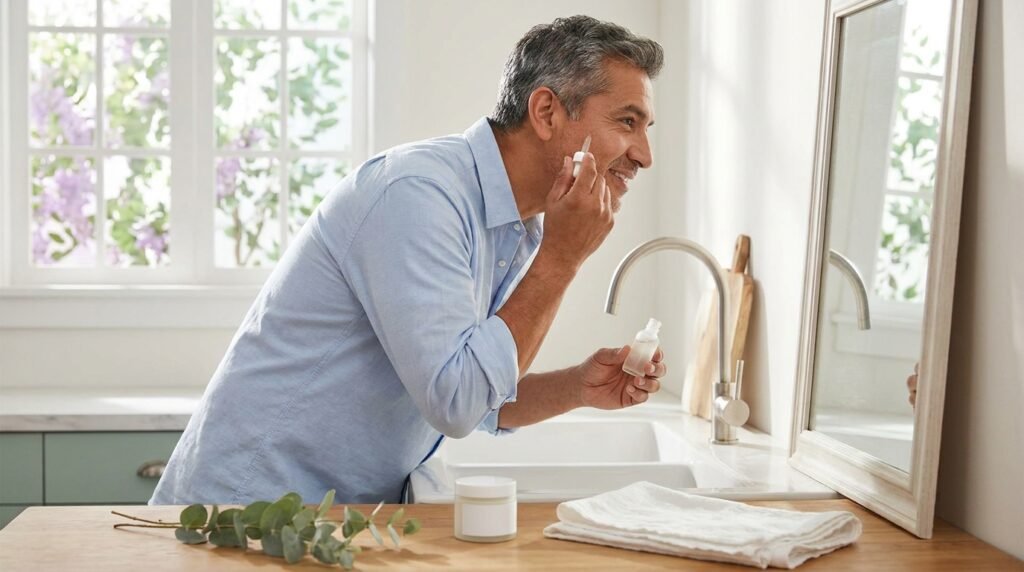
Skincare products with niacinamide are serums, moisturizers and toners containing vitamin B3, typically at 2-5%, that support the skin barrier, help regulate oil and gradually fade discoloration. Most can be layered with other actives.
Niacinamide (nicotinamide) is the amide form of vitamin B3. In skin it is a precursor to NAD+ and NADP, cofactors in cellular energy metabolism. The topical evidence is concentration-dependent, and many trials are small, short (4 to 12 weeks) and often manufacturer-funded. That context matters when a product promises a lot.
- Barrier support (about 2-5%): studies report increased ceramide and fatty acid synthesis and reduced transepidermal water loss, which is why niacinamide shows up in moisturizers for dry or compromised skin.
- Oil and pores (about 2-4%): a 2% formulation reduced sebum excretion over four weeks in one controlled study. Visible pore size improvements are real but modest, because pore size is largely genetic.
- Acne-prone skin (about 4%): a 4% gel performed comparably to 1% clindamycin gel for inflammatory lesions over eight weeks in an older trial. That is useful context, not a replacement for prescribed treatment.
- Hyperpigmentation (about 4-5%): 5% twice daily for eight weeks reduced dark spots versus vehicle. Niacinamide appears to slow the transfer of melanosomes to surrounding skin cells rather than block tyrosinase, the target of many other brighteners.
- Photoaged skin (about 5%): a 12-week trial found improvements in fine lines, blotchiness and sallowness.
None of this replaces daily broad-spectrum sunscreen, which is what actually prevents pigmentation from deepening. Results in trials took weeks, so judge a product at 8 to 12 weeks, not 8 to 12 days.
2. How to read a niacinamide label: percentage, position and pH
On an ingredient list, look for Niacinamide in the INCI (International Nomenclature of Cosmetic Ingredients) list. If the brand prints a percentage, take note of it. If not, use position. Ingredients above 1% must be listed in descending order of concentration, while those below 1% can appear in any order. A common marker is the preservative: phenoxyethanol is capped at 1% in the EU, so niacinamide listed ahead of it is probably above 1%. Niacinamide listed after fragrance or a preservative is likely a small dose, probably too low for the effects seen in studies.
Higher is not better. Products at 10% or more are common, but the controlled evidence sits mostly at 2-5%. Higher strengths are more often linked to stinging, flushing and tightness, especially on sensitive or barrier-damaged skin. If your skin is reactive, a well-formulated 2-4% product is a rational starting point.
pH matters for stability and tolerance. Niacinamide is most stable at roughly pH 5-7. In strongly acidic or alkaline conditions, or with prolonged heat, it can hydrolyze to nicotinic acid, which is associated with transient flushing and tingling. Many brands do not print pH. If it is not on the label or product page, do not guess. Check the manufacturer’s technical information, and treat any formula that also contains L-ascorbic acid, glycolic acid or salicylic acid as acidic by design, because those actives need a low pH to work.
Also check the rest of the formula:
- Companion ingredients: zinc PCA (often 0.5-1%) is aimed at oil control. Glycerin, ceramides, panthenol and hyaluronic acid suit dry or sensitive skin.
- Potential irritants: fragrance, essential oils and high levels of denatured alcohol can cause trouble regardless of the niacinamide.
- Format: leave-on products (serums, moisturizers) deliver more than rinse-off cleansers, where contact time is too short to be meaningful.
- Derivatives: myristoyl nicotinate and similar compounds are different molecules, and the niacinamide evidence does not automatically apply to them.
3. Niacinamide interactions: vitamin C, retinoids, acids and more
Niacinamide is among the more compatible actives. Most problems come from stacking too many things at once, not from a chemical clash.
Vitamin C. The idea that niacinamide and vitamin C cancel out comes from older work in which the two formed a colored complex under high heat and low pH. In modern, stable formulations this is rarely a practical concern. The real friction is pH: L-ascorbic acid (commonly 10-20%) works at about pH 3.5 or lower, while niacinamide prefers pH 5-7. Some people flush or sting when both are applied back to back. If that happens, use vitamin C in the morning and niacinamide at night. Derivatives such as magnesium ascorbyl phosphate work at a higher pH and pair more easily.
Retinoids. Niacinamide combines well with retinol (typically 0.25-1%), adapalene (0.1%) and tretinoin. Some data suggest niacinamide-containing moisturizers can reduce retinoid-related dryness by supporting the barrier, though it will not eliminate irritation. If you use a prescription retinoid, follow your prescriber’s instructions on adding other products.
AHAs and BHAs. Glycolic acid (usually 5-10%) and salicylic acid (0.5-2%) are formulated around pH 3-4. They are chemically compatible with niacinamide, but exfoliation plus any other active can compound irritation. If your skin is stinging or peeling, give the barrier a break and do not use both on the same night.
Benzoyl peroxide and azelaic acid. Both are generally compatible with niacinamide. Benzoyl peroxide (2.5-5%) can bleach fabric, so keep it off pillowcases and towels.
Hidden stacking. The most overlooked issue is niacinamide appearing in a toner, serum, moisturizer and sunscreen all at once. Each may be 2-5%, and the total load is unclear. If you use several products with it and notice flushing or tightness, that is the first thing to audit. Checking a barcode against your full routine, as Skin Scan Genius does, is a quick way to catch duplicate or conflicting actives.
4. Layering order and matching niacinamide to your skin type
The general rule is thinnest to thickest, and lowest pH to highest where it matters. A practical order:
- Morning: cleanse, then vitamin C (if used), niacinamide serum, moisturizer, and broad-spectrum SPF 30 or higher last.
- Evening: cleanse, then an exfoliating acid or retinoid on fully dry skin (on alternating nights, not together, unless a clinician directs otherwise), niacinamide serum, then moisturizer.
Allow a minute or two between water-based layers so they settle. If you use a retinoid and have sensitive skin, you can apply a niacinamide moisturizer before it as a buffer, which is a common technique but reduces how much the retinoid penetrates, so it is a trade-off.
By skin type:
- Oily or acne-prone: a lightweight 2-5% gel or serum, possibly with zinc PCA. Avoid pairing with several exfoliants at once.
- Dry or barrier-compromised: 2-5% inside a moisturizer with ceramides and glycerin. Skip high-strength serums while the barrier recovers.
- Sensitive: start around 2-4%, fragrance-free, every second day, and build up only if there is no stinging or redness.
- Hyperpigmentation or uneven tone: about 4-5% used consistently, with daily SPF. Look for it alongside other evidence-backed brighteners such as azelaic acid or tranexamic acid, but add them one at a time.
- Mature skin: about 5% is a reasonable partner to a retinoid, applied at the times that suit your tolerance.
Introduce one new active at a time and patch test on the jawline or behind the ear for 48 hours. If you want to check a specific niacinamide product against your current routine, scanning its barcode in Skin Scan Genius shows how the formula fits your skin type, concerns and existing actives before you buy.
Conditions such as rosacea, eczema and melasma are medical diagnoses. Niacinamide products may feel comfortable for some people with these conditions and aggravating for others, so see a dermatologist before building a routine around them. Stop using any product that causes persistent burning, swelling or rash.
Check it against your own routine. Skin Scan Genius reads a product’s full INCI list and flags conflicts with the actives you already use, by skin type and concern.
Frequently asked questions
Can I use niacinamide every day?
Most people tolerate 2-5% niacinamide once or twice daily, which is how it was used in most trials. If you notice persistent stinging, flushing or tightness, reduce frequency or concentration and check whether other products in your routine also contain it.
Can I use niacinamide and vitamin C together?
Usually yes in modern formulations, but the two work at different pH ranges (about 3.5 or lower for L-ascorbic acid, 5-7 for niacinamide). If layering them causes flushing or irritation, use vitamin C in the morning and niacinamide in the evening.
Does niacinamide cause purging or breakouts?
Niacinamide is not an exfoliant, so true purging is not expected. Breakouts after starting a product are more often caused by other ingredients such as heavy oils or occlusives, or by irritation. Stop and seek advice if breakouts persist or worsen.
How long does niacinamide take to work?
Studies measured results at 4 to 12 weeks, with barrier and oil changes appearing earlier and pigmentation or fine-line changes taking longer. Use it consistently with daily sunscreen and judge it at about 8 to 12 weeks.