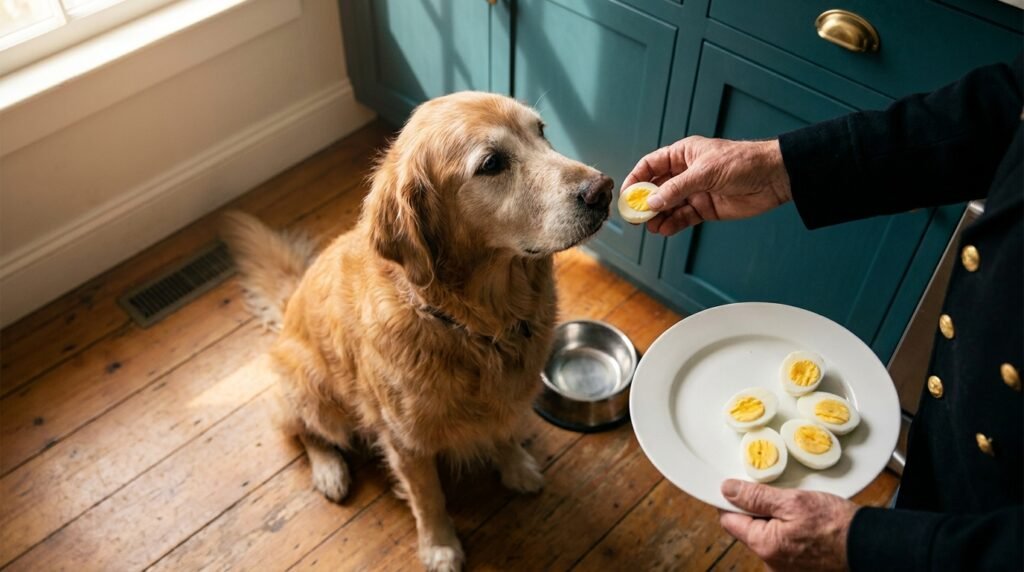
1. Can dogs eat eggs? The short answer and the limits
Yes, most healthy dogs can eat eggs when they are fully cooked, plain, and given in small amounts as an occasional treat. Raw, seasoned, or fatty preparations carry risks, and some dogs should avoid them entirely.
Eggs are a dense source of protein, fat, and micronutrients such as riboflavin and selenium. That density is also the catch. A single large egg is roughly 70 calories, which is a meaningful share of the day for a small dog. A commonly cited guideline is to keep treats and extras to about 10 percent of daily calories, with the rest coming from a complete and balanced diet. If the food in your cart is already complete and balanced, an egg is a bonus, not a nutritional requirement.
Plain means plain: boiled, poached, or scrambled in a dry nonstick pan, with no butter, oil, salt, cheese, or milk. Let it cool and chop it up. Introduce it once, in a small amount, and watch for loose stool, vomiting, itching, or lethargy. If any of that appears or persists, stop feeding it and call your veterinarian.
Eggshells are not a necessary extra. Calcium balance matters in a formulated diet, particularly for puppies and large breeds, so ask your vet before using shells as a supplement.
2. When eggs are a problem: preparation and health conditions
Most egg trouble comes from how the egg is prepared or from a condition the dog already has. Here are the main cases to know before you offer one.
- Raw eggs: Raw eggs can carry Salmonella and other bacteria. That is a risk to the dog and to the people handling the food, bowls, and the dog afterward. Cooking thoroughly removes most of that concern.
- Seasonings and add-ins: Onions, garlic, and chives are toxic to dogs, and they show up often in omelets, breakfast scrambles, and leftovers. Some baked goods contain xylitol, which is also dangerous to dogs. If your dog eats an egg dish containing any of these, treat it as a possible poisoning. Contact your veterinarian or a poison line right away, such as the ASPCA Animal Poison Control Center or Pet Poison Helpline, and do not wait for symptoms.
- High-fat preparations: Eggs cooked in butter, bacon grease, or oil add fat quickly. Fatty meals are a known concern for dogs with a history of pancreatitis. Whether any egg is appropriate for that dog is a question for your veterinarian.
- Kidney disease: Eggs contribute protein and phosphorus. Dogs with kidney disease often need carefully managed diets, so check with your veterinarian before adding eggs.
- Allergies and sensitivities: Egg is among the ingredients reported as food allergens in dogs. Chronic itching, ear problems, or digestive upset should be assessed by a veterinarian, not solved by guessing at ingredients.
Puppies, seniors, very small dogs, and overweight dogs have different calorie and nutrient needs. If your dog falls into one of those groups, or is on a prescription or therapeutic diet, ask your vet whether eggs fit before you add them.
3. How egg and protein ingredients show up on a dog food label
On a bag, egg appears under names like whole egg, dried egg, dried egg product, egg white, or egg yolk. It contributes protein with a broad amino acid profile, fat (mostly from the yolk), and often acts as a binder in baked or extruded foods. Dried egg is concentrated. Fresh or whole egg is mostly water, which matters for the next point.
What ingredient order implies. Ingredients must be listed in descending order by weight, measured as the ingredients go into the mixer, before cooking removes water. A fresh ingredient such as whole egg, fresh chicken, or fresh salmon is heavy with moisture, so it can sit first on the list while contributing less dry protein than the position suggests. A meal or dried ingredient, such as chicken meal or dried egg, has already lost water, so it can contribute more than its position implies. Order also does not show quantity. Two ingredients can be separated by a sliver of weight or a huge gap, and the list will not tell you which.
Watch for ingredient splitting. If you see peas, pea protein, pea starch, and pea fiber as four separate entries, the manufacturer has divided one source into pieces that each rank lower. Combined, that source might outweigh the first-listed meat.
Where the guaranteed analysis fits. This panel lists minimum crude protein, minimum crude fat, maximum crude fiber, and maximum moisture. It does not name sources, so it cannot tell you whether the protein came from egg and meat or from corn gluten meal. The word crude refers to the lab method, not to quality. To compare a can with a kibble, convert to dry matter: divide the protein percentage by 100 minus the moisture percentage. A canned food with 8 percent protein and 78 percent moisture works out to about 36 percent on a dry matter basis (8 / 22). A kibble at 26 percent protein with 10 percent moisture is about 29 percent (26 / 90). The can looks lower on the label and is higher in practice.
This is one place where a barcode scan genuinely helps. Pet Scan Genius can lay out the ingredient list and flag items, like egg, that matter given the details you have entered about your dog, so you are not decoding the small print by hand in the aisle. It informs your choice. It does not make it, and your vet is the right voice on any health condition.
4. Fillers, vague meat terms, by-products, and AAFCO wording
Once you are past the egg, these are the label failure modes worth checking.
- Fillers: There is no regulatory definition of filler. In practice it means low-cost ingredients that add bulk or calories, such as corn gluten meal, wheat middlings, rice hulls, peanut hulls, or powdered cellulose. Not all fiber is a problem, since ingredients like beet pulp serve a purpose in stool quality. The warning sign is a high-ranking plant ingredient doing the job the front-of-bag marketing credits to meat or egg.
- Ambiguous meat terms: Meat meal, meat and bone meal, animal fat, and animal digest do not name a species. Compare that to chicken meal or chicken fat. An unnamed source can change between batches, which is a real problem for any dog whose vet has told you to avoid a particular protein.
- By-products: A named by-product, such as chicken by-product meal, tells you the species. A vague meat by-products does not. By-products can include organs that are nutritious, and AAFCO defines them as specific parts, not feathers or hair in the case of poultry. The concern is vagueness and variability, not the word itself.
- Name rules: A product called Egg and Chicken Dinner only needs the named ingredients to make up 25 percent of the product, not counting water. With egg requires just 3 percent. Egg flavor can mean a trace amount. Only the unqualified form, such as Chicken Dog Food, implies 95 percent.
How the AAFCO statement is worded. Find it in the small print, usually near the guaranteed analysis. AAFCO does not approve products. The statement is the manufacturer’s claim, and the exact wording matters:
- Formulated to meet the AAFCO Dog Food Nutrient Profiles means the recipe was calculated on paper to meet nutrient levels.
- Animal feeding tests using AAFCO procedures substantiate means the food was fed to dogs in a trial. This is a different, more direct form of substantiation.
- Life stage matters. Maintenance is for adults. All life stages includes growth, and for puppies expected to be large adults, look for wording that mentions growth of large-size dogs.
- Intermittent or supplemental feeding only means it is not a complete diet. That is fine for a topper or a treat, and a problem if it is meant to be the daily meal.
When you are holding the bag, check four things: a named protein near the top, a plain explanation of any egg or plant protein, no unexplained meat or animal terms, and an AAFCO statement that matches your dog’s life stage. Scanning the barcode with Pet Scan Genius can speed up that check against your dog’s breed, age, weight, and dietary needs, but any food decision tied to a health condition belongs with your veterinarian.
Check the bag before you buy it. Pet Scan Genius reads a pet food label and explains what the ingredients mean for your animal by breed, age, weight and health conditions.
Frequently asked questions
Can dogs eat scrambled eggs?
Plain scrambled eggs cooked without butter, oil, salt, or seasoning are generally fine for healthy dogs as an occasional treat. Avoid versions with onion, garlic, chives, or cheese. If your dog has a health condition, ask your veterinarian first.
Can dogs eat raw eggs?
Raw eggs can carry Salmonella and other bacteria, which is a risk to your dog and to anyone handling the food. Cooking them fully reduces that risk. If you are considering raw feeding in general, discuss it with your veterinarian.
How many eggs can a dog eat?
There is no single number, because it depends on the dog’s size, calorie needs, and overall diet. One large egg is about 70 calories, and treats are commonly kept to around 10 percent of daily calories. A very small dog may only suit a fraction of an egg, so ask your vet for guidance.
Are eggs okay for dogs with pancreatitis, kidney disease, or allergies?
Do not assume so. Egg yolk is fatty, eggs contribute protein and phosphorus, and egg is a reported food allergen in dogs. For any of these conditions, consult your veterinarian before feeding eggs or any food that lists egg as an ingredient.
This article is general information, not veterinary advice. Talk to your vet about your own animal.