
1. Why Finding Reliable Vegan Snacks Is Harder Than It Looks in 2026
You are late for a meeting, your stomach is growling, and the convenience aisle is full of bright packages shouting “plant-based,” “clean,” and “dairy-free.” If you have ever stood there squinting at a tiny ingredient panel and wondering whether a snack is truly vegan, you are not being overly cautious. You are responding to a real gap in how food is labeled. The plant-based snack market has grown faster than the rules that govern it, and busy shoppers pay the price in time, stress, and the occasional unpleasant surprise.
In the United States, there is no federal legal definition of the word “vegan” on a food label. A bag of chips can carry a leaf icon and still contain an ingredient with an animal source, or be made on shared equipment with milk and egg. The FDA Food Allergen Labeling & Consumer Protection Act (FALCPA) requires plain-language declaration of major allergens such as milk, eggs, fish, shellfish, tree nuts, peanuts, wheat, and soy (sesame was later added). That is helpful for allergy safety, but it is not a vegan certification. Many animal-derived ingredients, such as carmine, shellac, or certain vitamin D3 sources, are not major allergens and have no obligation to be flagged.
There is also a health dimension that gets lost when “vegan” becomes a marketing halo. Vegan does not automatically mean nutritious. Many shelf-stable plant-based snacks are heavily processed, built from refined starches, isolated proteins, added sugars, and tropical fats. The World Health Organization Guidelines on Healthy Diets & Saturated Fats recommend keeping saturated fat and free sugars to modest shares of daily energy. Coconut-oil-coated clusters and “protein” crisps can use up a surprising share of that budget in a single serving. You deserve to know both things: is it vegan, and what else is in it?
So what does a good busy-day vegan snack look like? In general, the strongest candidates come from categories with short ingredient lists: plain or lightly seasoned roasted chickpeas, whole-fruit-and-nut bars, air-popped or simply seasoned popcorn, seaweed sheets, dried fruit with no added sugar, nut butter packs, and dark chocolate with no milk-derived ingredients. We call these category-level picks because formulas change without notice, and the same brand can vary by flavor, country, and production run. The reliable approach is to scan the exact package in your hand, which is what the rest of this guide shows you how to do.
Scan Any Label for Hidden Additives and Allergens — Free
Never second-guess confusing grocery labels again. Download Food Scan Genius to uncover hidden additives, toxic dyes, and allergens for the whole household before you buy.


2. Sneaky Ingredients and Label Loopholes Hiding in Vegan Snacks
Reading a label is a skill, and the label itself is only part of the story. Ingredients can be nested inside other ingredients, such as a seasoning blend within a coating within a bar, and a casual glance will miss them. Regulators in other regions take a more structured approach; for example, the European Food Safety Authority (EFSA) Additive Safety Regulations require additives to be assessed and listed with E-numbers. Knowing those numbers helps, but not every shopper has time to memorize them. Here are the most common traps we see in vegan snacks:
- Carmine (E120) and shellac (E904): Carmine is a red pigment made from insects, and shellac or “confectioner’s glaze” comes from lac insects. Both appear in coated candies, fruit snacks, and some glazed items that otherwise look plant-based.
- “Natural flavors” and unspecified sources: This umbrella term can include flavor components derived from animal sources. The label often will not tell you, which is why sub-ingredient analysis matters.
- Mono- and diglycerides (E471) and similar emulsifiers: These can be made from plant or animal fats. Unless the manufacturer specifies the source, you cannot tell from the panel alone.
- Milk derivatives in “non-dairy” products: Some items labeled non-dairy still contain casein or sodium caseinate. Since milk is a declared allergen under FALCPA, it should appear in the allergen statement, but only if you check it.
- Honey, gelatin, and L-cysteine: Honey sweetens many granola bites, gelatin binds gummies and marshmallow-style snacks, and L-cysteine (E920) can be derived from animal sources in some baked goods.
- Ultra-processing disguised by a green label: Isolated proteins, emulsifiers, and flavor systems can push a vegan snack into the highest NOVA category. Peer-reviewed work indexed in PubMed Research on Ultra-Processed Foods & Gut Microbiome Disruption is part of a growing literature on how ultra-processed eating patterns may affect health outcomes, which is why we show processing level alongside ingredients.
One more loophole deserves mention: precautionary statements such as “may contain milk” are voluntary in the US. A snack can be vegan by ingredients and still be produced on lines shared with dairy. Whether that matters depends on your reason for eating vegan. An ethical vegan may accept shared equipment, while someone with a milk allergy absolutely cannot. A good tool should let you set that line yourself rather than deciding for you.
3. Food Scan Genius vs. Other Ways to Check Vegan Snacks
| Dimension | Food Scan Genius | Fig | Spoonful | Manual Label Reading |
|---|---|---|---|---|
| Cost of core features | 100% free, zero paywalls | $59/yr premium | Limited scans | Free, but costs your time |
| Database and ingredient depth | NutriGraph: 5,000,000+ verified UPC/EAN barcodes with recursive sub-ingredient parsing | Varies; verify current coverage | Varies; verify current coverage | Only what you can read and recognize |
| Dietary profiles and custom rules | 39 profiles plus custom sensitivities (seed oils, dyes, additives) | Varies by plan | Varies by plan | Entirely memory-based |
| Family screening | Multi-household profiles; one scan, named fail attribution | Verify current features | Verify current features | Repeat the check for each person |
| Languages | 11 global languages with real-time in-app translation | Verify current languages | Verify current languages | Depends on your own fluency |
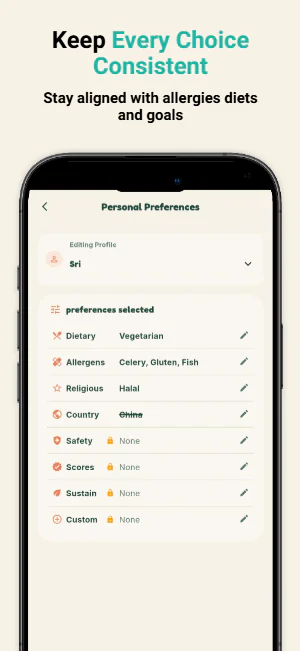
The core technical difference is how ingredients are read. Many tools match a product’s ingredient list against a keyword list, which misses anything tucked inside a compound ingredient. Food Scan Genius is powered by the NutriGraph Database, which parses ingredients recursively. If a seasoning contains a flavor system that contains an emulsifier, each layer is expanded and checked against your profile. For vegan snacks, where the problem ingredient is rarely listed up front, that depth is the difference between a confident answer and a guess. With 39 supported dietary profiles and the option to add your own custom sensitivity, you can screen for vegan status, a specific allergen, seed oils, or a dye you want to avoid, all in the same scan. Households benefit too: add each family member, and a single scan returns clear attribution such as “Fails for Sri (Gluten),” so nobody has to cross-check multiple lists in the aisle.
We also believe a scanner should inform you, not scold you. ScanGenius AI Insight explains in plain language why a product passed or failed, and pairs that with a NOVA 1-4 classification and a Nutri-Score instead of a single moralizing number. A vegan cookie might pass your dietary profile, show NOVA 4 for its processing level, and earn a middling Nutri-Score; you see all three and decide what fits your day. It is context, not judgment. Core features are free with no paywalls, and the interface works in 11 languages with real-time translation, so a label in another language is no longer a barrier when you shop while traveling.
4. Related Food Safety & Dietary Guides
- Best Food Allergy Scanner App – Scan Food Labels Instantly — Food Allergy & Sensitivity Scanner Hub
- The 7 Best Free Food Scanner Apps of 2026 — best free food scanner apps
- Choosing the Best Barcode Scan App for Your Health — guide to choosing a barcode scanner app
- Food Scan Genius: World’s #1 Food Ingredient Scanner App — Food Scan Genius scanner app
5. Scientific & Health Authority References
- FDA Food Allergen Labeling & Consumer Protection Act (FALCPA)
- European Food Safety Authority (EFSA) Additive Safety Regulations
- PubMed Research on Ultra-Processed Foods & Gut Microbiome Disruption
- World Health Organization Guidelines on Healthy Diets & Saturated Fats
6. How to Scan in 3 Simple Steps
- Download Food Scan Genius free on iOS or Android. There is no paywall on core features, so you can start scanning vegan snacks right away.
- Set up your profile by selecting the Vegan dietary profile from the 39 available options. Then add custom sensitivities, such as seed oils, a specific dye, or an additive you prefer to avoid, and create named profiles for each family member.
- Scan the barcode of any snack in about two seconds. Review the pass or fail result, the named attribution for each household member, the ScanGenius AI Insight, the NOVA 1-4 class, and the Nutri-Score, and keep the instant audit trail for later.
Instant Vegan Audit Trail
7. Frequently Asked Questions (FAQ)
How can I tell if a store-bought snack is truly vegan?
Start with the ingredient list and allergen statement, but know their limits. The US has no federal definition of “vegan,” and animal-derived ingredients like carmine, shellac, or some emulsifiers are not required to be flagged as allergens. Food Scan Genius scans the barcode and uses NutriGraph’s recursive sub-ingredient parsing to check nested ingredients against the Vegan profile, so you see exactly which component caused a fail instead of relying on a front-of-pack claim.
Are vegan snacks automatically healthier than regular snacks?
No. Vegan describes the source of ingredients, not nutritional quality. Many vegan snacks are ultra-processed or high in saturated fat or added sugar. That is why Food Scan Genius shows a NOVA 1-4 classification and a Nutri-Score next to your dietary result, and ScanGenius AI Insight explains the context without reducing the product to a single good-or-bad score.
Can one scan check a snack for a vegan household member and someone with an allergy?
Yes. With Multi-Household Family Profiles, you add each person and their needs, such as one vegan and one gluten-free. A single scan screens the product for everyone and names who it fails for, for example “Fails for Sri (Gluten).” It saves time on busy days and reduces the risk of missing a conflict in a shared snack drawer.
Is Food Scan Genius really free for checking vegan snacks?
Yes. Core features are 100% free with zero paywalls, including the NutriGraph database of 5,000,000+ verified UPC/EAN barcodes, 39 dietary profiles, custom sensitivities, family profiles, and 11 languages with real-time translation. This contrasts with subscription-based options such as Fig at $59 per year or tools that limit the number of scans you can run.
Know What’s In Your Food Before You Buy — Scan Free Today
Never second-guess confusing grocery labels again. Download Food Scan Genius to uncover hidden additives, toxic dyes, and allergens for the whole household before you buy.