
1. Why Choosing Vegetarian Snacks Is Harder Than It Looks in 2026
You are between meetings, the school pickup line is moving, or your train leaves in six minutes. You grab a snack that looks harmless: a granola bar with a leaf on the wrapper, a bag of crackers, a fruit chew. Then a quiet doubt sets in. Does the red color come from an insect? Is that gelatin? Was this made on a line shared with peanuts or sesame? For people who eat vegetarian snacks and manage a food allergy at the same time, that doubt is a daily tax. It is not paranoia. It is a reasonable response to labels that were not designed with you in mind.
The problem has two layers. First, vegetarian status is not regulated the way allergens are. A package can say ‘plant-based’ or ‘meat-free’ while still containing carmine, gelatin, or shellac, because those terms have no uniform legal definition in many markets. Second, the most common swaps people make to avoid animal products introduce allergen risk. Nut butters, soy protein, tahini, and wheat-based meat alternatives all show up in portable snacks. The Food Allergy Research & Education (FARE) Clinical Standards are a useful reference for the major allergens, and they underline why careful label reading is a safety habit and not a preference.
Convenience adds more pressure. Portable snacks are usually packaged and shelf-stable, which often means longer ingredient lists with emulsifiers, flavor systems, and coatings. Research summarized in PubMed Research on Ultra-Processed Foods & Gut Microbiome Disruption has linked heavily processed diets with changes in gut health. A snack can be vegetarian and still be a poor everyday fit. The World Health Organization Guidelines on Healthy Diets & Saturated Fats also remind us that fats, sugars, and sodium in packaged snacks deserve a look beyond the front-of-pack claim.
If you have spent years squinting at tiny print, you are not being difficult. You are doing real risk management with incomplete information. This guide gives you ten portable picks, the label traps behind them, and a faster way to check any product you meet on a busy day. It is general education and not medical advice, so please follow your allergist’s guidance for your own situation.
Scan Any Label for Hidden Additives and Allergens — Free
Never second-guess confusing grocery labels again. Download Food Scan Genius to uncover hidden additives, toxic dyes, and allergens for the whole household before you buy.


2. Sneaky Ingredients and Labeling Loopholes in Vegetarian Snacks
Most label surprises come from ingredients whose names do not sound like animal products or allergens. Here are the ones that catch careful shoppers most often, along with the regulatory gaps behind them. Additive naming and approval rules differ by region, and the European Food Safety Authority (EFSA) Additive Safety Regulations are a good window into how E-numbers are evaluated.
- Carmine / cochineal (E120): A red dye made from insects. It turns up in fruit snacks, yogurts, and flavored coatings, and may be listed only as ‘color added’ or ‘natural color’ in some contexts.
- Gelatin: Made from animal collagen. It appears in gummies, marshmallow-style bars, and some yogurt-based snacks. It is easy to spot when named, but harder inside multi-part coatings or fillings.
- Shellac / confectioner’s glaze (E904): A resin secreted by lac insects, used for shine on coated nuts, candies, and some bars. It is often missing from the minds of shoppers who check only for meat.
- Rennet in cheese snacks: Traditional rennet comes from animal stomachs. Many cheese sticks and crisps use microbial or vegetable alternatives, but the label may simply say ‘enzymes.’
- ‘Natural flavors’: This umbrella term can include animal-derived components, and it can also contain trace allergen-derived ingredients. Major allergens in US-regulated foods must be declared, but the animal origin of a flavor does not have to be.
- ‘May contain’ statements: Precautionary allergen labeling is voluntary in the US and varies elsewhere. The absence of a warning does not guarantee the absence of cross-contact, and the presence of one is not standardized either.
Ten Portable Vegetarian Snacks, With Allergy Notes
Always verify the specific brand, since formulations and facilities change. Here are ten starting points and the allergen to double-check on each.
- Roasted chickpeas: Crunchy, fiber-rich, and usually free of the top allergens. Check seasoning blends for milk powder.
- Air-popped or lightly seasoned popcorn: A whole-grain option. Watch for butter flavoring, cheese powder, and shared facilities with tree nuts.
- Sunflower seed butter single-serve packs: A peanut- and tree-nut-free alternative to nut butters. Confirm the facility’s cross-contact practices.
- Pumpkin and sunflower seed trail mix: Nut-free when made without nuts. Skip versions with candy-coated pieces that may contain shellac or carmine.
- Shelled or pod edamame: Protein-rich and simple. It is a soy product, so it is not suitable for soy allergy.
- Roasted seaweed sheets: Light and portable. Check for sesame oil, which is now a labeled major allergen in the US, and for fish-based seasonings.
- Hard-boiled eggs: Suitable for ovo-vegetarians. Not suitable for egg allergy.
- String cheese made with microbial rennet: Suitable for lacto-vegetarians if the rennet is non-animal. Not suitable for milk allergy.
- Whole fruit or 100% fruit leather: Simple and low-risk. Avoid versions with gelatin or carmine-colored layers.
- Oat-and-seed energy bites: Convenient to batch at home. Use certified gluten-free oats if celiac disease is a concern, and choose seed butter if nuts are an issue.
3. Head-to-Head: Scanning Smarter Than Squinting at Labels
| Dimension | Food Scan Genius | Fig | Spoonful | Manual Label Reading |
|---|---|---|---|---|
| Cost | 100% free core features, zero paywalls | $59/year | Limited scans | Free, but time-intensive |
| Data Depth | NutriGraph Database: 5M+ verified UPC/EAN barcodes with recursive sub-ingredient parsing | Barcode database | Barcode database | Only what you can read and interpret |
| Dietary Profiles | 39 profiles plus custom sensitivities (seed oils, dyes, additives) | Preset profiles | Preset profiles | Depends on your memory |
| Family Screening | Multi-household profiles, one scan, named results like ‘Fails for Sri (Gluten)’ | Profile-based | Profile-based | Re-check per person |
| Languages | 11 global languages with real-time in-app translation | Varies | Varies | Only languages you read |
The hard part of vegetarian snack shopping is that the risk often sits one level down. A cereal bar lists ‘chocolate coating,’ the coating lists ‘glaze,’ and the glaze may involve shellac. Food Scan Genius is powered by the NutriGraph Database, which covers more than 5,000,000 verified UPC/EAN barcodes and uses recursive abstract-syntax-tree parsing to unpack compound ingredients into their sub-ingredients. That means a nested ingredient is evaluated as part of the whole product rather than being skipped. Because you can build from 39 supported dietary profiles and add your own custom sensitivity, such as a specific dye or seed oils, the scan reflects your rules and not a generic idea of ‘healthy.’
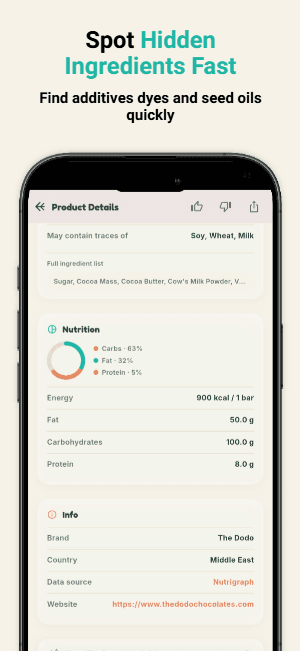
Each result includes ScanGenius AI Insight, which explains why something flagged and what it means in context. It is paired with NOVA 1-4 processing classification and Nutri-Score, without a simplistic moral ‘good or bad’ number. A roasted chickpea snack and a flavored cracker can both be vegetarian, but they sit differently on the processing spectrum, and you see that difference plainly. With multi-household family profiles, a single scan screens everyone at once, so you get named attribution rather than a vague warning. In a shared snack drawer, that clarity saves time and reduces mistakes.
4. Related Food Safety & Dietary Guides
- Best Food Allergy Scanner App – Scan Food Labels Instantly — Food Allergy & Sensitivity Scanner Hub
- The 7 Best Free Food Scanner Apps of 2026 — best free food scanner apps
- Choosing the Best Barcode Scan App for Your Health — guide to choosing a barcode scanner app
- Food Scan Genius: World’s #1 Food Ingredient Scanner App — Food Scan Genius scanner app
5. Scientific & Health Authority References
- Food Allergy Research & Education (FARE) Clinical Standards
- European Food Safety Authority (EFSA) Additive Safety Regulations
- PubMed Research on Ultra-Processed Foods & Gut Microbiome Disruption
- World Health Organization Guidelines on Healthy Diets & Saturated Fats
6. How to Scan in 3 Simple Steps
- Download Food Scan Genius free on iOS or Android. Core features have no paywall, so you can start scanning vegetarian snacks right away.
- Set up your profile for your exact needs. Choose from 39 dietary profiles (such as vegetarian, nut-free, or egg-free), add custom sensitivities like carmine, specific dyes, or seed oils, and create named profiles for each family member in your household.
- Scan the barcode on any snack in about two seconds. Review the instant audit trail, including named fail attribution, ScanGenius AI Insight, NOVA group, and Nutri-Score, before it goes into your bag.
Personalized Match & AI Insight
7. Frequently Asked Questions (FAQ)
Are all vegetarian snacks safe for people with food allergies?
No. Vegetarian status and allergen safety are separate questions. Many vegetarian snacks rely on dairy, eggs, soy, wheat, tree nuts, peanuts, or sesame, all of which are major allergens in the US. Food Scan Genius lets you combine a vegetarian profile with allergen-related profiles and custom sensitivities, so one scan checks both. Always follow your allergist’s advice for your own risk level.
How can I tell if a snack contains hidden animal ingredients like carmine or gelatin?
Look for names such as carmine, cochineal, E120, gelatin, shellac, confectioner’s glaze, or E904, and be cautious with vague terms like ‘natural flavors’ or ‘enzymes.’ Ingredients inside coatings and fillings can be easy to miss. Food Scan Genius uses the NutriGraph Database’s recursive sub-ingredient parsing to look inside compound ingredients, then flags matches against your vegetarian profile.
Is Food Scan Genius really free for checking vegetarian snacks?
Yes. Core scanning, profiles, and insights are 100% free with zero paywalls. That contrasts with Fig’s $59/year subscription and Spoonful’s limited scans. You can scan as many vegetarian snacks as you need while shopping or packing lunches.
Can I screen snacks for my whole family at once?
Yes. Multi-household family profiles let you add each person with their own dietary needs. A single scan checks the product against everyone and names who it fails for, for example ‘Fails for Sri (Gluten).’ The app also supports 11 global languages with real-time in-app translation, which helps when you shop abroad or share the household with family members who read other languages.
Know What’s In Your Food Before You Buy — Scan Free Today
Never second-guess confusing grocery labels again. Download Food Scan Genius to uncover hidden additives, toxic dyes, and allergens for the whole household before you buy.