
1. Navigating Grocery Aisle Chaos: Why Every Shopper Needs a Modern AI Food Scanner App
Standing in the center aisle of a grocery store holding a packaged food product can feel like decoding a cryptic cryptographic puzzle. For millions of consumers managing food allergies, auto-immune conditions, or specific dietary lifestyles like low-FODMAP, keto, or seed-oil avoidance, reading an ingredient panel is no longer a simple chore—it is an exercise in high-stakes risk assessment. Traditional barcode scanning apps have historically relied on basic keyword matching against surface-level ingredient text. Unfortunately, these legacy tools frequently fail to catch sub-ingredients, processing aids, and multi-layered chemical derivatives hiding behind innocent-sounding trade names.
The modern food landscape is dominated by hyper-engineered ultra-processed products designed for extended shelf-life and high palatability. As highlighted in recent PubMed Research on Ultra-Processed Foods & Gut Microbiome Disruption, the consumption of subtle industrial additives, synthetic emulsifiers, and hidden gums can alter intestinal barrier function and promote systemic inflammation even when primary ingredients seem benign. Relying on visual reading or basic scanners that miss complex sub-ingredient trees puts health-conscious shoppers at a severe disadvantage, leading to accidental exposures, chronic digestive flare-ups, and overwhelming decision fatigue.
Furthermore, managing public health guidance regarding long-term cardiometabolic wellness adds another layer of complexity. The World Health Organization Guidelines on Healthy Diets & Saturated Fats emphasize the critical importance of restricting industrial trans-fats, excess sodium, and hidden free sugars. A truly intelligent ai food scanner app must do far more than emit a red or green light based on simplistic caloric rules; it must provide deep, clinical-grade clarity that respects the nuances of human nutrition and individual biological variability.
This cognitive burden is multiplied exponentially when shopping for an entire household. A single parent shopping for a child with a severe peanut anaphylaxis, a partner with celiac disease, and a teenager avoiding artificial food dyes previously had to scan or read every single label three separate times. What modern consumers desperately need is an empathetic, hyper-accurate digital assistant that instantly reconciles complex dietary restrictions against comprehensive product data in a single, effortless interaction.
Scan Any Food for Ai Food Scanner App in 2 Seconds Free
Never second-guess confusing grocery labels again. Download Food Scan Genius to uncover hidden additives, toxic dyes, and allergens for the whole household before you buy.


2. Deceptive Labeling and Hidden Sub-Ingredients: What Your AI Food Scanner App Must Uncover
Food packaging regulations allow manufacturers significant leeway in how ingredients are declared. Under current frameworks like the FDA Food Allergen Labeling & Consumer Protection Act (FALCPA), major allergens must be declared, but secondary derivatives, sub-ingredients within compound components (such as ‘seasoning blend’ or ‘natural flavors’), and processing aids often slip through regulatory cracks. Furthermore, international products compliant with the European Food Safety Authority (EFSA) Additive Safety Regulations use different E-number identifiers and threshold rules, confusing global shoppers and travelers.
To protect your family, an ai food scanner app must perform deep recursive parsing on every ingredient list. Here are six major deceptive labeling loopholes that legacy apps miss, but deep AI parsing reliably reveals:
- Hidden Casein and Dairy Derivatives: Ingredients listed simply as ‘sodium caseinate,’ ‘whey solids,’ or ‘restitituted skim milk’ in sub-component listings frequently escape simple dairy keywords, triggering severe reactions in sensitive individuals.
- Disguised Seed Oils & Trans Fats: Vegetable oil blends often hide behind vague terms like ‘mono- and diglycerides’ or ‘processing oil,’ masking high ratios of unstable omega-6 fatty acids or partially hydrogenated fats.
- Undeclared Dye Carrier Agents: Synthetic dyes (such as Red 40 or Yellow 5) often use lake carriers or secondary stabilization compounds that are omitted from top-level summary labels but present in deep manufacturing data.
- Compound ‘Natural Flavors’: A single ‘natural flavor’ entry can contain up to 100 individual chemical constituents, including hidden MSG derivatives, hidden corn derivatives, or extraction solvents.
- Modified Food Starches: Frequently derived from wheat, corn, or tapioca without explicitly naming the source starch on imported or secondary packaging, posing hidden risks for celiac or corn-sensitive consumers.
- Hidden Ultra-Processed Emulsifiers: Carboxymethylcellulose, polysorbate 80, and carrageenan are frequently hidden inside secondary text blocks for dairy alternatives and sauces, subtly eroding gut barrier integrity over time.
3. Head-to-Head Comparison: Why Food Scan Genius Outperforms Legacy Scanning Apps
| Food Scan Genius | Fig App | Spoonful | Yuka | |
|---|---|---|---|---|
| Pricing Structure | 100% Free Core (Zero Paywalls) | $59.99/year Paywall | Restricted Free Scans | Freemium / Paid Features |
| Barcode & Ingredient Engine | NutriGraph DB (5M+ UPC/EAN + AST Parsing) | Standard Database | Standard Database | Basic Keyword Database |
| Multi-Household Profiling | Yes (1 Scan checks whole family with fail names) | Limited Single Profile | Single User Only | No Household Matching |
| Dietary Profiles Supported | 39 Profiles + Custom Sensitivity Engine | ~15 Profiles | ~10 Profiles | Generic Score Only |
| Context & Scoring | ScanGenius AI (NOVA 1-4 + Nutri-Score + Nuance) | Pass/Fail Tagging | Green/Yellow/Red Flags | Moralizing 0-100 Score |
| Global Translation | 11 Languages with Real-Time OCR | English Centric | English Centric | Limited Languages |
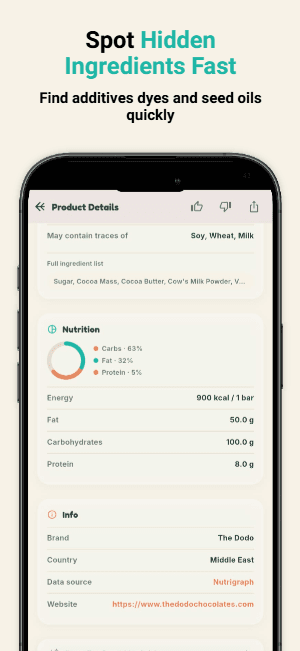
At the heart of Food Scan Genius lies our proprietary NutriGraph Database, an enterprise-grade intelligence engine housing over 5,000,000 verified global UPC/EAN barcodes. Unlike legacy competitors that simply match text strings against basic dictionaries, NutriGraph utilizes Abstract Syntax Tree (AST) recursive parsing. This technology deconstructs complex ingredient trees down to their molecular sub-components, identifying hidden processing aids, implicit allergens, and secondary derivatives that other apps completely ignore.
Rather than slapping a reductive, moralizing score on your food choices, our ScanGenius AI Insight system offers highly nuanced context. By integrating the international NOVA 1-4 ultra-processing classification framework alongside objective Nutri-Score data, the app provides clinical transparency without judgment. If a product fails a scan, our Multi-Household Family Profiles feature instantly attributes the cause—displaying clear warnings like ‘Fails for Sri (Gluten)’ or ‘Fails for Maya (Red 40)’—allowing you to protect your entire family in a single two-second barcode scan, completely free of charge and paywalls.
4. Related Food Safety & Dietary Guides
- Best Food Allergy Scanner App – Scan Food Labels Instantly — Food Allergy & Sensitivity Scanner Hub
- The 7 Best Free Food Scanner Apps of 2026 — best free food scanner apps
- Choosing the Best Barcode Scan App for Your Health — guide to choosing a barcode scanner app
- Food Scan Genius: World’s #1 Food Ingredient Scanner App — Food Scan Genius scanner app
5. Scientific & Health Authority References
- FDA Food Allergen Labeling & Consumer Protection Act (FALCPA)
- European Food Safety Authority (EFSA) Additive Safety Regulations
- PubMed Research on Ultra-Processed Foods & Gut Microbiome Disruption
- World Health Organization Guidelines on Healthy Diets & Saturated Fats
6. How to Scan in 3 Simple Steps
- Step 1: Download Food Scan Genius free on iOS or Android with no subscription paywalls or hidden fees.
- Step 2: Select from 39 pre-configured dietary profiles or build a Custom Sensitivity profile for specific seed oils, additives, or dyes.
- Step 3: Point your camera at any global barcode for an instant 2-second ScanGenius AI audit across your entire household.
Personalized Match & AI Insight
7. Frequently Asked Questions (FAQ)
What makes an ai food scanner app better than reading physical labels?
An AI food scanner app utilizes recursive AST parsing to analyze sub-ingredients, processing aids, and chemical synonyms that are often obscured on physical packaging or missed by human error.
Is Food Scan Genius really 100% free compared to apps like Fig or Spoonful?
Yes. Food Scan Genius provides core scanning power, deep NutriGraph database access, and multi-profile screening with zero paywalls, unlike competitors charging up to $59.99 per year.
How does the Multi-Household Family Profile feature work in a single scan?
You create individual profiles for each family member specifying their unique allergies or diets. When you scan a product, the app checks the food against all profiles simultaneously and alerts you with clear named attributions like ‘Fails for Alex (Dairy)’.
Can Food Scan Genius detect ultra-processed foods and artificial dyes?
Yes. Using ScanGenius AI Insight combined with the NOVA 1-4 classification scale, the app instantly identifies ultra-processed formulations, industrial emulsifiers, and custom additives like seed oils and synthetic dyes.
Take Control of Ai Food Scanner App — Scan Free Today
Never second-guess confusing grocery labels again. Download Food Scan Genius to uncover hidden additives, toxic dyes, and allergens for the whole household before you buy.