Author name: Santa Claw

Is Mayo Dairy Free? The Simple Truth & The Hidden Lies

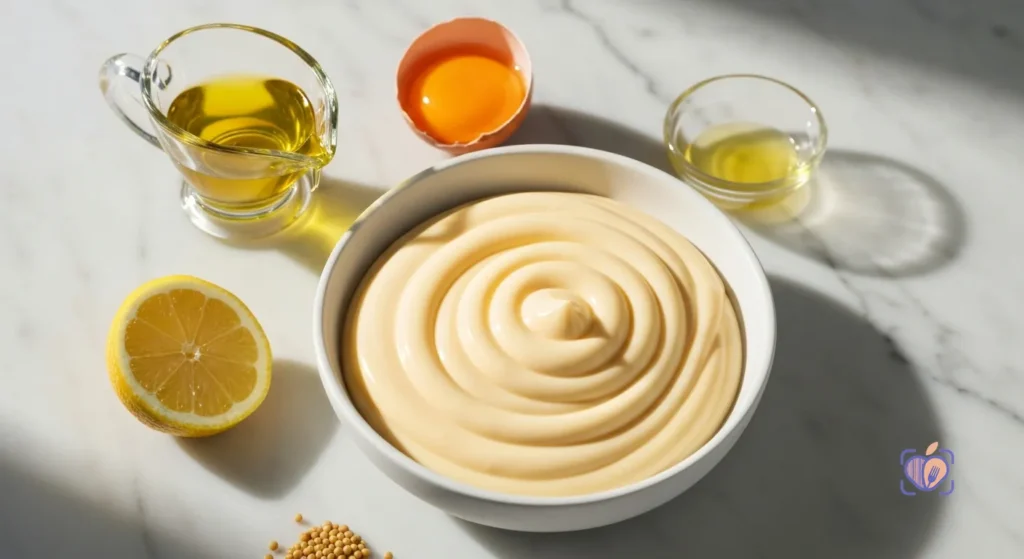
Yes, traditional, classic mayonnaise is dairy-free. Its core ingredients are oil, egg yolk, and an acid like vinegar or lemon juice—none of which come from milk. But the story doesn’t end there. In the modern grocery aisle, the line between what something is and what it contains has blurred. The simple confidence you should have when picking a condiment has been replaced by doubt. We believe you deserve clarity. The Anatomy of Mayonnaise: What’s Really Inside? Memory is a powerful thing. You remember mayonnaise as a simple staple. And you’re right. At its heart, it’s an emulsion—a beautiful, creamy fusion of ingredients that have nothing to do with dairy. Oil: The body and soul. Typically a neutral vegetable oil. Egg Yolk: The emulsifier that masterfully holds the oil and acid together. Remember: eggs are not dairy. They come from poultry, not mammals. Vinegar or Lemon Juice: The acid that provides the signature tang and helps preserve it. That’s it. A simple recipe for a perfect condiment. No milk. No cream. No cheese. So why the confusion? The Plot Twist: When Mayo Becomes a Dairy Trap The moment a brand adds a descriptor—’creamy,’ ‘light,’ ‘rich,’ or a fancy flavor—you need to become a detective. To cut costs or achieve a certain texture, manufacturers often introduce dairy-derived additives that turn a safe choice into a problem. Watch For These Aliases on the Label: Modified Food Starch: Sometimes can be dairy-based. Casein or Caseinates: Milk proteins used as binders. Whey: The liquid remaining after milk has been curdled and strained. Milk Powder or Skim Milk Powder: Often used in ‘light’ or ‘low-fat’ versions to add creaminess. Lactose: Milk sugar. Decoding these labels is a modern burden, a skill nobody asked to learn. The challenge of deciphering food labels has become a universal experience, demanding constant vigilance. That’s before you even consider the minefield of ‘mayo-like’ dressings, dips, and aiolis that are often shelved in the same section. Many of these are formulated with sour cream, yogurt, or cheese as a base. The Real Danger: When It’s Not What’s on the Label, But What’s Not Cross-contamination is the ghost in the machine. A factory that produces a dairy-free mayonnaise on the same line as a creamy ranch dressing risks trace amounts of dairy making their way into your jar. For the highly sensitive, this is not a trivial matter. It’s a fundamental issue of trust. Consumers are tired of being kept in the dark, joining a growing movement to urge food companies to stop hiding ingredients and provide the transparency they deserve. Your desire for safety isn’t a niche concern; it’s a right. The Future of Food is Clarity There’s a seismic shift happening in the grocery world. The best stores and brands are realizing that helping you make informed choices isn’t just good service; it’s the future. We’re seeing how new technology helps shoppers with dietary needs find what’s right for them, but we’ve taken it a step further. We built Food Scan Genius for this very moment. We built it because the question isn’t just “is mayo dairy free?” It’s about every ingredient in every product, every single time you shop. Our advanced AI doesn’t just scan the main ingredient list. It parses and understands over 200 specific edge-case hidden labels, cross-contamination warnings, and confusing chemical names. It gives you a simple, definitive ‘yes’ or ‘no’ in an instant. Stop guessing. Stop worrying. Start knowing. Get the only tool that delivers true peace of mind. Download Food Scan Genius for free. Download on the App Store Download on Google Play Frequently Asked Questions Is Hellmann’s mayo dairy-free? Yes, the classic Hellmann’s Real Mayonnaise is dairy-free. However, their flavored varieties or dressings may contain dairy, so it is critical to check the label of each specific product. Are eggs considered dairy? No. This is a common misconception. Dairy products are derived from the milk of mammals, such as cows and goats. Eggs are laid by poultry and are not a dairy product. What’s the difference between mayo and aioli? Traditionally, aioli is an emulsion of garlic and olive oil. However, in many modern commercial products, ‘aioli’ is simply used as a marketing term for flavored mayonnaise, which can sometimes include dairy ingredients like parmesan cheese or cream to enhance the flavor. How can I be 100% sure my mayo is dairy-free? The only way to be completely sure is to verify the ingredients list for every product, every time. For absolute certainty and speed, use the Food Scan Genius app to instantly check for over 200 hidden dairy derivatives and cross-contamination risks.

Is Mayo Dairy Free? The Simple Truth & The Hidden Lies Read Post »
The Cleanse App: A Clear Look at What You’re Really Eating

A cleanse app is a mobile application that allows you to scan food product barcodes to instantly analyze ingredients, additives, and nutritional information, helping you make informed decisions to eat cleaner and avoid unwanted substances. It’s not about deprivation. It’s about clarity. A feeling we’ve lost somewhere between the farm and the fluorescent-lit aisle. We’re told a story on the front of the box, but the real story—the one that matters—is in the fine print. And it’s written in a language designed to confuse. The New Nostalgia: Why We Crave a Cleanse There was a time when you knew where your food came from. You knew the person who grew it, or you grew it yourself. That connection created trust. Today, we’re disconnected, and that void is filled with anxiety. The desire for a “cleanse” isn’t about a 7-day juice fast anymore. It’s a search for that lost trust. It’s a rebellion against ambiguity. This isn’t just a feeling; it’s a movement. Consumers are demanding transparency, a peek behind the curtain of complex supply chains and clever marketing. As Forbes highlights, consumers want the truth about product ingredients, and they want it now. A modern cleanse app isn’t a diet plan; it’s a tool of empowerment. It puts the truth back in your hands. The Illusion of ‘Healthy’ Marketers are paid to create desire, to wrap a product in an idea. “All Natural.” “Heart Healthy.” “Gluten-Free.” These are just words on a package. They create an emotional response, a shortcut to a decision. But what do they really mean? Often, not much. The real test is what happens when you turn the box over. That’s where the truth lies, and where most people get lost. Beyond the Barcode: What Your Current App is Missing Some apps have tried. They give you a simple score, a red or green light. It’s a start, but it’s not enough. It’s like judging a book by a one-word review. The food industry is more sophisticated than that. It hides sugars under dozens of names. It conceals additives within phrases like “spice blend” and “natural flavors.” These are often components of ultra-processed foods, a category that demands careful shopping tips. Your simple scanner app isn’t built to catch this nuance. It’s designed for the obvious, not the cleverly hidden. This is where Food Scan Genius changes the conversation. We built our technology to go deeper. We parse over 200+ specific edge-case hidden labels that others simply miss. We’re talking about: MSG-masking agents like Yeast Extract and Hydrolyzed Vegetable Protein. Hidden sugars like Dextrin and Maltodextrin. Vague, unregulated terms like “Artificial Flavorings.” Inflammatory oils and controversial chemical preservatives. We don’t just tell you if it’s ‘good’ or ‘bad’. We show you everything, so you can decide what “clean” means to you. Food Scan Genius: The Only Cleanse App You’ll Ever Need This isn’t just another app. It’s a new way of looking at the grocery store. It’s a tool that transforms every shopping trip into an act of clarity. You are no longer a passive consumer; you are an informed expert on your own health. This shift in power is already influencing grocery consumer behavior on a massive scale, and we are leading the charge by providing the most detailed analysis on the market. Stop guessing. Stop feeling anxious in aisle four. Stop falling for the story on the front of the box. It’s time to read the real story, the one you deserve to know. With Food Scan Genius, you hold the truth in your hand. Scan a single barcode and see the difference. Your cleanse starts not with a diet, but with a decision. The decision to know more. Take control of your cart. Download Food Scan Genius for free and see what you’ve been missing. Download on the App Store Download on Google Play Frequently Asked Questions What makes a good cleanse app? A superior cleanse app moves beyond simple calorie counting or traffic-light ratings. It offers deep, transparent ingredient analysis, highlighting additives, hidden sugars, allergens, and chemicals. The goal is information, not judgment, empowering you to define your own version of ‘clean eating’. Is Food Scan Genius free to use? Yes. The core function—unlimited barcode scanning to reveal the complete truth about your food—is 100% free. We believe everyone has a right to know what’s in their food. That clarity shouldn’t be behind a paywall. How does this app help with a ‘cleanse’? Food Scan Genius redefines the ‘cleanse.’ Instead of a restrictive, temporary diet, it facilitates a permanent lifestyle of clean, informed eating. By exposing the 200+ hidden ingredients and deceptive labels that other apps miss, we give you the power to eliminate the unwanted additives, chemicals, and sugars from your life, one grocery trip at a time.

The Cleanse App: A Clear Look at What You’re Really Eating Read Post »

Decoding the Calories in a Chick-fil-A Meal: A 2026 Guide

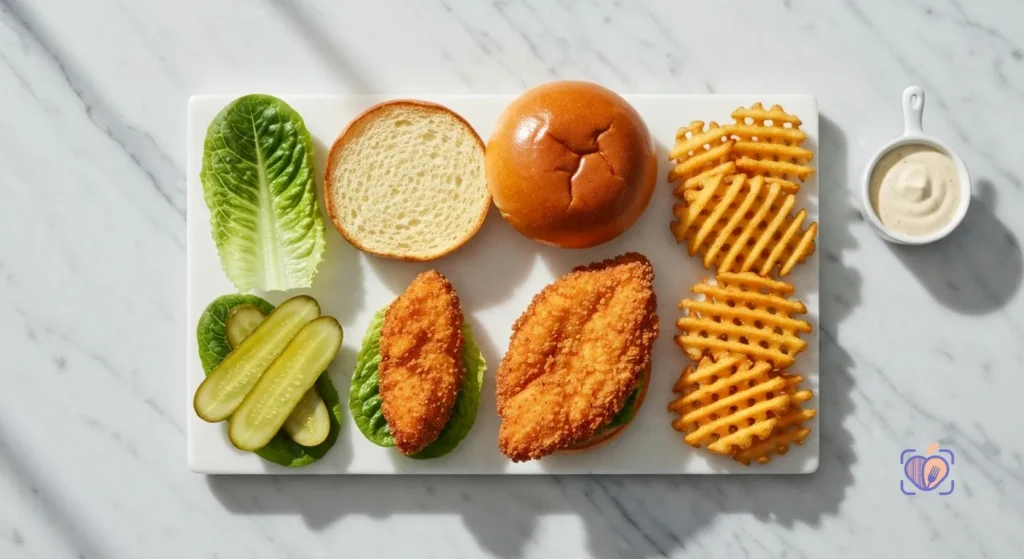
A standard Chick-fil-A meal, consisting of a Chick-fil-A® Chicken Sandwich, a medium order of Waffle Potato Fries®, and a medium Coca-Cola®, contains approximately 1,060 calories. This total can vary significantly based on your specific choices for sides, drinks, and sauces. As the VP of Product for NutriGraph API, I see a world where this kind of data is not just a curiosity but a critical component of daily decision-making. Consumers are no longer satisfied with a single number; they demand a deeper understanding of what they’re eating. Let’s break down the data behind this popular meal. Table of Contents Toggle The Anatomy of a Chick-fil-A Meal’s Calorie Count The Main Event: The Chick-fil-A® Chicken Sandwich (440 Calories) The Iconic Side: Waffle Potato Fries® (420 Calories – Medium) The Drink: A Calorie Wildcard Beyond Calories: The Hidden Data in Your Meal The Future of Food Intelligence Is API-Driven Frequently Asked Questions About Chick-fil-A Calories How many calories are in a Chick-fil-A 8-count nugget meal? What is the lowest-calorie meal at Chick-fil-A? How can I find the full nutritional information for my Chick-fil-A order? Related Posts The Anatomy of a Chick-fil-A Meal’s Calorie Count That 1,060-calorie figure is a baseline. To truly understand the impact of your order, you have to look at each component individually. The magic, and the calories, are in the details. The Main Event: The Chick-fil-A® Chicken Sandwich (440 Calories) The centerpiece of the meal is a masterclass in simplicity: a seasoned, breaded chicken breast on a toasted, buttered bun with dill pickle chips. Its 440 calories are primarily composed of protein (29g), fat (17g), and carbohydrates (41g). It’s the balance of these macros that makes it satisfying, but also a significant contributor to the meal’s total energy load. The Iconic Side: Waffle Potato Fries® (420 Calories – Medium) Cooked in canola oil and lightly salted, the medium Waffle Fries® nearly match the sandwich in calories. At 420 calories, they bring 24g of fat and 45g of carbohydrates to the table. While delicious, this single side item can represent a quarter of a person’s recommended daily caloric intake. The Drink: A Calorie Wildcard Your beverage choice is the easiest place to swing the calorie count. A medium Coca-Cola® adds 200 calories, all from sugar. Swapping it for a Diet Lemonade (30 calories) or Unsweetened Iced Tea (0 calories) dramatically alters the meal’s final tally. This highlights a crucial point: small choices have a big impact. Beyond Calories: The Hidden Data in Your Meal In 2026, simply counting calories is an outdated model. The modern health-conscious consumer, and the apps they use, are digging deeper. They’re asking about sodium levels, added sugars, preservatives, and potential allergens. Fast food, by its nature, is often categorized as an ultra-processed food, which brings a different set of health considerations beyond just the caloric density. This shift toward ingredient transparency is a global phenomenon. Consumers everywhere are learning new ways to decode complex food labels to make choices that align with their health goals, whether it’s avoiding specific additives or managing a food allergy. This is no longer a niche behavior; it’s the new standard. The Future of Food Intelligence Is API-Driven The entire landscape of food consumption is being reshaped by technology. As a recent analysis shows, a new generation of apps are fundamentally influencing consumer behavior before they even place an order. Users expect personalized insights, not generic data. They want to know if a meal fits their gluten-free, low-FODMAP, or dairy-free lifestyle in real-time. This is the problem we solve at NutriGraph. Providing basic calorie counts is table stakes. The next generation of health and wellness applications are built on our API, which offers unparalleled Allergen & Additive Intelligence. We empower developers to build experiences that can instantly parse a meal’s ingredients and flag everything from hidden allergens like dairy or soy to specific food additives and preservatives. Your users shouldn’t have to spend 10 minutes digging through a PDF on a restaurant’s website. You can give them instant, actionable intelligence. It’s time to build smarter. Ready to power your app with the most advanced food data API? Explore our documentation and claim your 10,000 free monthly calls to get started. NutriGraph API Frequently Asked Questions About Chick-fil-A Calories How many calories are in a Chick-fil-A 8-count nugget meal? An 8-count Chick-fil-A Nuggets® meal with medium Waffle Fries® and a medium Coke contains approximately 870 calories. The nuggets themselves are 250 calories, making this a slightly lower-calorie option than the classic sandwich meal. What is the lowest-calorie meal at Chick-fil-A? For a full meal, one of the lowest-calorie options is the Grilled Chicken Sandwich (390 calories) paired with a Fruit Cup (60 calories) and water (0 calories), for a total of 450 calories. The Grilled Market Salad with Light Balsamic Vinaigrette is another excellent choice at around 310 calories. How can I find the full nutritional information for my Chick-fil-A order? Chick-fil-A provides comprehensive nutritional information on its official website and mobile app. You can use their online nutrition calculator to build your exact meal, including sauces, and see a detailed breakdown of calories, macros, and allergens. .lwrp.link-whisper-related-posts{ margin-top: 40px; margin-bottom: 30px; } .lwrp .lwrp-title{ }.lwrp .lwrp-description{ } .lwrp .lwrp-list-container{ } .lwrp .lwrp-list-multi-container{ display: flex; } .lwrp .lwrp-list-double{ width: 48%; } .lwrp .lwrp-list-triple{ width: 32%; } .lwrp .lwrp-list-row-container{ display: flex; justify-content: space-between; } .lwrp .lwrp-list-row-container .lwrp-list-item{ width: calc(33% – 20px); } .lwrp .lwrp-list-item:not(.lwrp-no-posts-message-item){ max-width: 150px; } .lwrp .lwrp-list-item img{ max-width: 100%; height: auto; object-fit: cover; aspect-ratio: 1 / 1; } .lwrp .lwrp-list-item.lwrp-empty-list-item{ background: initial !important; } .lwrp .lwrp-list-item .lwrp-list-link .lwrp-list-link-title-text, .lwrp .lwrp-list-item .lwrp-list-no-posts-message{ }@media screen and (max-width: 480px) { .lwrp.link-whisper-related-posts{ } .lwrp .lwrp-title{ }.lwrp .lwrp-description{ } .lwrp .lwrp-list-multi-container{ flex-direction: column; } .lwrp .lwrp-list-multi-container ul.lwrp-list{ margin-top: 0px; margin-bottom: 0px; padding-top: 0px; padding-bottom: 0px; } .lwrp .lwrp-list-double, .lwrp .lwrp-list-triple{ width: 100%; } .lwrp .lwrp-list-row-container{ justify-content: initial; flex-direction: column; } .lwrp .lwrp-list-row-container .lwrp-list-item{ width: 100%; } .lwrp .lwrp-list-item:not(.lwrp-no-posts-message-item){ max-width: initial; } .lwrp .lwrp-list-item .lwrp-list-link .lwrp-list-link-title-text, .lwrp .lwrp-list-item .lwrp-list-no-posts-message{ }; } Related Posts

Decoding the Calories in a Chick-fil-A Meal: A 2026 Guide Read Post »

Toxic Ingredients in Dog Food: The Deception in Their Dish

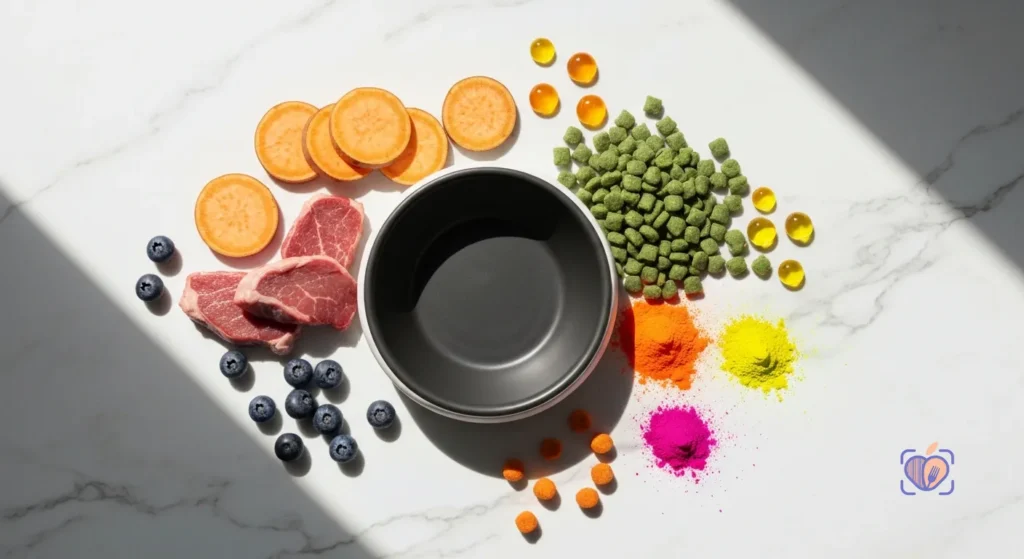
The most common toxic ingredients in dog food are artificial preservatives like BHA and BHT, artificial colors such as Red 40 and Blue 2, propylene glycol, and vague terms like ‘meat and bone meal’. These additives are linked to severe health issues, including organ damage, allergic reactions, and cancer. The connection you have with your dog is simple. It’s built on trust. On loyalty. So why is the simple act of feeding them so complicated? You look at a bag of dog food and you’re met with a wall of promises, smiling dogs, and a list of ingredients you can’t pronounce. It’s a feeling of uncertainty, of doubt. A feeling that you’re not being told the whole story. They’re counting on your confusion. We’re here to provide clarity. The Red Flags on the Label: Decoding the Danger The truth is, what’s written on the front of the bag is marketing. The real story is in the fine print on the back. It’s a language designed to obscure, not inform. But once you know what to look for, you can’t unsee it. Chemical Preservatives: A Deal with the Devil To extend shelf life, manufacturers make a trade. They add industrial chemicals to your dog’s food that would never pass muster on your own dinner table. BHA (Butylated Hydroxyanisole) & BHT (Butylated Hydroxytoluene): These are petroleum-derived antioxidants used to prevent fats from going rancid. They are also recognized carcinogens linked to kidney and liver damage. Ethoxyquin: A preservative and pesticide so toxic it’s not permitted in human food. Yet, it finds its way into your dog’s bowl through fish meal. The conversation around whether food chemicals are dangerous is not just for our own plates; it applies directly to the ones we place on the floor for our most loyal companions. Artificial Colors & Flavors: An Illusion for You Your dog doesn’t care if their kibble is a vibrant red or a uniform brown. Artificial colors like Blue 2, Red 40, and Yellow 5 & 6 are there to appeal to you. These dyes are linked to hyperactivity, allergic reactions, and tumor growth. Artificial flavors are just as bad, often used to mask the taste of low-quality, rancid ingredients. Fillers & By-Products: The Industry’s Dirty Secret This is where the deception becomes profound. Vague, non-specific terms allow manufacturers to use the cheapest, lowest-quality ingredients imaginable. Meat and Bone Meal, Animal Digest, By-Products: What kind of animal? What part? These terms are catch-alls for rendered material from sources that can include diseased livestock, expired meat from grocery stores, and parts of the animal with zero nutritional value. The U.S. Food and Drug Administration (FDA) sets baseline standards, but the definitions for these ingredients are alarmingly broad. Corn Gluten Meal & Wheat Gluten: These are cheap, low-quality fillers used to boost the protein percentage on the label. They are difficult for dogs to digest and are common allergens. Sweeteners & Humectants: Unnecessary Evils Propylene Glycol: A component of antifreeze, it’s used to keep semi-moist kibble from drying out. It’s toxic to cats and can cause serious health issues in dogs over time. Corn Syrup & Sugar: Your dog has no nutritional need for added sugar. It’s an addictive filler that leads to obesity, diabetes, and dental decay. The Pet Scan Genius Solution: Truth in the Palm of Your Hand Memorizing this list is a good start. But the industry is always finding new ways to hide the same old tricks. You shouldn’t have to be a chemist to feel confident about what you’re buying. You need a partner who can cut through the noise. That’s Pet Scan Genius. Our app allows you to scan any pet food or treat barcode and get an instant, easy-to-understand analysis. We flag the toxic additives, dangerous fillers, hidden allergens, and marketing gimmicks. We replace confusion with certainty. Stop guessing. Start knowing. The power to make the right choice has been in your hands all along. We just help you see it. Visit Pet Scan Genius to see how it works and download the app that puts you back in control. FAQ: Your Questions, Answered What is the single most toxic ingredient to avoid in dog food? While many are harmful, Ethoxyquin is one of the most dangerous. It is a synthetic preservative and pesticide that has been banned from use in human food due to its links to liver and kidney damage, as well as cancer. Its presence, often hidden within ‘fish meal’, is a major red flag. Can “grain-free” dog food still have toxic ingredients? Absolutely. “Grain-free” is a marketing term, not a guarantee of quality. Many grain-free foods simply replace grains with other cheap fillers like potatoes or pea protein, while still containing the same toxic preservatives, artificial colors, and low-quality meat meals. How can I tell if my dog is having a reaction to a toxic ingredient? Symptoms can be subtle or severe. Look for chronic issues like itchy skin, dull coat, ear infections, digestive upset (gas, diarrhea), and low energy. These are often dismissed as ‘normal for the breed,’ but they can be direct signs of a food intolerance or reaction to a harmful additive. What makes Pet Scan Genius better than just reading the label? We do more than just read the label—we interpret it. We maintain an exhaustive, constantly updated database of ingredients, their aliases, and their known health risks. We translate the complex chemical names and vague marketing terms into a simple ‘Good’ or ‘Bad’ verdict, providing the ‘why’ behind our analysis so you can make a truly informed decision in seconds.

Toxic Ingredients in Dog Food: The Deception in Their Dish Read Post »

The Only Chicken and Quinoa Meals Guide You’ll Ever Need

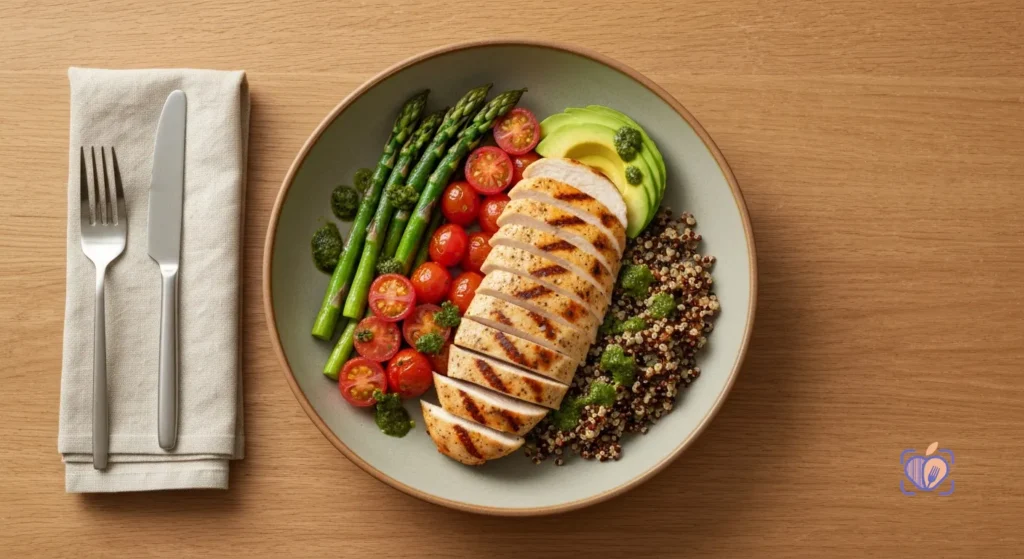
Chicken and quinoa meals are the definitive combination of lean, muscle-supporting protein and a complete, fiber-rich ancient grain, offering a nutritionally balanced and endlessly versatile foundation for a modern, healthy diet. It’s a simple combination. Almost nostalgic. In a world of fleeting trends and complex formulas, the pairing of chicken and quinoa feels like an anchor—a return to something fundamental. It’s the kind of meal that doesn’t shout; it performs. It fuels your ambition, quiets your hunger, and delivers clean, uncomplicated energy. But the modern food landscape is anything but simple. That’s where the real story begins. Why This Combination Isn’t a Recipe; It’s a Strategy We’re told to eat well, but the path is littered with noise. Chicken and quinoa cuts through it. It isn’t just a healthy option; it’s a strategic choice for a life lived with intention. The Cornerstone: High-Quality Lean Protein Chicken, when chosen correctly, is a powerhouse. It’s the bedrock of muscle repair, the key to feeling satiated, and a clean source of B vitamins. The goal isn’t just to consume protein, but to provide your body with the effective, high-quality building blocks it needs to thrive. According to health authorities like the Mayo Clinic, a balanced diet rich in lean proteins is fundamental for overall wellness, from maintaining a healthy weight to supporting cellular function. The Ancient Grain, Perfected for Today Quinoa isn’t just another grain. It’s a complete protein, meaning it contains all nine essential amino acids. It’s packed with fiber for digestive health and is naturally gluten-free, making it a safe and powerful choice for a wide range of dietary needs. For those managing sensitivities, understanding gluten-free fundamentals is crucial, and resources from organizations like the Celiac Disease Foundation provide essential clarity on living a gluten-free lifestyle. The Anatomy of an Unforgettable Meal Perfection here isn’t about complexity; it’s about quality and technique. The Foundation: Master the Basics For the Chicken: Season simply with salt, pepper, and paprika. Pan-sear for a golden crust, then finish in the oven. This guarantees a juicy, flavorful result every single time. For the Quinoa: The secret to fluffy, perfect quinoa is twofold. First, rinse it under cold water to remove its natural saponin coating, which can cause bitterness. Second, use a 1:2 ratio of quinoa to water or, for more flavor, chicken broth. The Elevation: Flavor and Texture This is where a simple meal becomes your signature dish. Flavor Boosters: A simple lemon-tahini dressing, a fresh herb vinaigrette with parsley and dill, or a scoop of vibrant chimichurri. Vegetable Complements: Add color and nutrients with roasted broccoli, charred bell peppers, fresh cherry tomatoes, or crisp cucumbers. The Final Touch: A sprinkle of toasted almonds, creamy avocado slices, or a crumble of feta cheese adds a satisfying contrast in texture. The Deception on the Label You choose lean chicken. You choose organic quinoa. You think you’ve made the perfect choice. But what about the marinade you used? The bottled dressing? The chicken broth itself? The aisles are filled with products masquerading as healthy. They’re packed with hidden sugars, industrial seed oils, and chemical additives designed to keep you coming back. The rise of these engineered products is a welldocumented concern, as experts on ultra-processed foods point out their link to negative health outcomes. This is the problem Food Scan Genius was built to solve. We believe the truth shouldn’t be a secret hidden in fine print. Our technology goes deeper, parsing over 200+ specific edge-case hidden labels for things like “natural flavors,” yeast extract, and modified corn starch. We tell you what’s really in your food. Stop guessing. Start knowing. Take back control of your kitchen and your health. Download Food Scan Genius for free. Download on Google Play Download on the App Store Three Archetypes to Get You Started Here are three templates. Make them your own. The Mediterranean Power Bowl Lemon and herb grilled chicken, quinoa, chopped cucumber, cherry tomatoes, Kalamata olives, and a sprinkle of feta. Drizzle with high-quality olive oil. The Southwest Zest Bowl Chili-lime seasoned chicken, quinoa, black beans, corn salsa, sliced avocado, and a dollop of Greek yogurt. The Asian-Inspired Nourish Bowl Ginger-garlic chicken, quinoa, steamed edamame, shredded carrots, and sliced scallions. Be wary of bottled sauces; a simple mix of tamari, sesame oil, and rice vinegar is cleaner and better. Frequently Asked Questions About Chicken and Quinoa Meals Is a chicken and quinoa meal good for weight loss? Absolutely. The high protein and fiber content promotes satiety, helping you feel fuller for longer and reducing overall calorie intake. Its balanced nutrient profile also provides sustained energy, preventing the blood sugar spikes that lead to cravings. Can I meal prep chicken and quinoa for the week? Yes, this combination is ideal for meal prepping. Cook a large batch of chicken and quinoa on Sunday. Store them in separate airtight containers in the refrigerator. You can then assemble your bowls in minutes throughout the week, adding fresh vegetables and dressings each day. How do I make my quinoa less bland? Flavor starts with the cooking liquid. Substitute water with a high-quality chicken or vegetable broth. Add a bay leaf, a smashed garlic clove, or a sprig of thyme to the pot while it simmers. Finally, season with salt and a squeeze of fresh lemon or lime juice after it’s cooked.

The Only Chicken and Quinoa Meals Guide You’ll Ever Need Read Post »

Suntan Lotion Brands: The 2026 CMO’s Guide to What’s Really on Your Skin

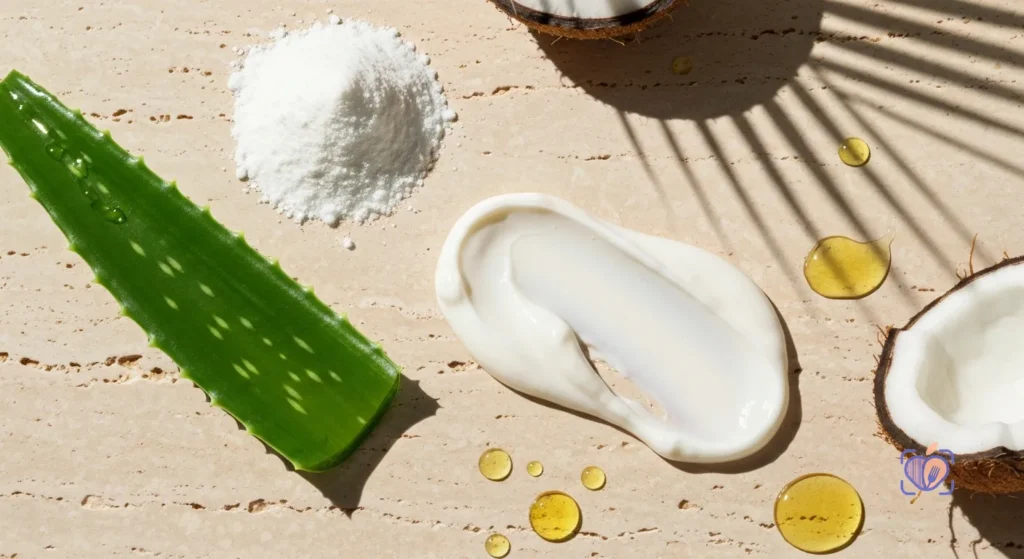
The best suntan lotion brands are those that deliver broad-spectrum UV protection using mineral-based filters like non-nano zinc oxide and titanium dioxide, while meticulously excluding harmful chemicals. The superior choice isn’t a single brand name, but a category of brands committed to formulations free of endocrine disruptors (like oxybenzone), potential carcinogens, and common allergens. I’ve spent a career crafting desire on Madison Avenue. I know a promise when I see one. A suntan lotion brand promises you a golden tan, a day without burns, a memory of the sun. But what it doesn’t tell you, what’s hidden in the fine print, is the real story. The story is in the ingredients, and frankly, most brands hope you don’t read it. Beyond the SPF: A New Definition of Protection The number on the bottle—SPF 30, 50, 100—is a starting point, not the destination. It’s a measure of UVB protection, a promise against the burn. But the sun’s threat is a two-front war. UVA rays, the silent aggressors responsible for premature aging and deep-tissue damage, are just as critical. A brand worth your trust offers “Broad-Spectrum” protection, a shield against both. But the real moment of truth is in the formula. For decades, the industry relied on chemical filters. They’re effective, yes, but they come at a cost. Your skin absorbs them, and from there, they enter your bloodstream. This is no longer an acceptable trade-off. The modern standard is physical, or mineral, sunscreen. It creates a physical barrier on your skin that reflects UV rays. It’s simple, elegant, and far less likely to cause irritation or systemic issues. The Ingredient Dossier: Heroes vs. Villains Making the right choice feels complicated because it’s designed to be. Brands use complex chemical names and beautiful packaging to distract you from the simple truth. Let’s cut through the noise. The Heroes: Mineral Actives There are only two you need to remember: Zinc Oxide and Titanium Dioxide. These are the gold standard. They provide powerful, stable, broad-spectrum protection by sitting on top of your skin, not sinking into it. They are the definition of what a protective product should be: a shield, not a sponge. The Villains: Chemicals of Concern This is the list marketing departments don’t want you to see. It’s a complex world of chemicals, and using a reliable skincare ingredient checker can feel like having a chemist in your pocket. At Skin Scan Genius, our entire purpose is to flag these for you, but you should know the main offenders: Oxybenzone & Octinoxate: These are known endocrine disruptors. They mimic hormones in your body, and their long-term effects are a risk you shouldn’t have to take for a day at the beach. Parabens (Propylparaben, Butylparaben): Used as preservatives, these have also been linked to hormone disruption. Phthalates: Often hidden under the word “fragrance,” these chemicals are tied to a host of health concerns. This isn’t just about a day at the beach; it’s a daily ritual. Leading outlets continually stress the importance of how to select the right protection for your skin type and environment. The conversation is global, with health authorities worldwide providing detailed guidance on how to choose and use sunscreen effectively to ensure public safety. But you’re not a chemist. You’re standing in an aisle, looking at a wall of promises. That’s where clarity becomes currency. That’s where we come in. Skin Scan Genius was built for this moment. We analyze the ingredient lists of thousands of cosmetic and skincare products, including suntan lotion brands, to instantly identify endocrine disruptors, carcinogens, allergens, and other red-flag chemicals. We translate the fine print into a simple, definitive answer: safe, or not. Stop guessing. Start knowing. Your skin is your largest organ. It deserves more than a clever marketing campaign. It deserves the truth. Visit Skin Scan Genius and download the app. Scan a barcode, see the truth, and make a decision with confidence. Frequently Asked Questions About Suntan Lotion What is the best type of suntan lotion? The best and safest type is a mineral-based, broad-spectrum lotion with an SPF of 30 or higher. Look for non-nano zinc oxide or titanium dioxide as the primary active ingredients for effective protection without the systemic absorption of chemical filters. Are expensive suntan lotion brands better? Not necessarily. Price is often a reflection of marketing, packaging, and brand positioning, not ingredient safety or efficacy. A moderately priced mineral sunscreen from a reputable brand can be far superior to a luxury chemical-based product. The ingredient list is the only true measure of quality. How can I tell if a suntan lotion brand is safe? The only way to be certain is to analyze the full ingredient list. Avoid common chemical filters like oxybenzone and octinoxate, as well as parabens and undisclosed “fragrance.” For a definitive answer, use an analysis tool like the Skin Scan Genius app to check for known endocrine disruptors, carcinogens, and allergens before you buy.

Suntan Lotion Brands: The 2026 CMO’s Guide to What’s Really on Your Skin Read Post »

180g in oz: The Definitive Conversion for Developers & Chefs

180 grams is equal to 6.34931 ounces. For all practical purposes in recipes and nutrition labeling, you can round this to 6.35 ounces. As the VP of Product for NutriGraph API, I see this conversion constantly. It’s a fundamental unit of measurement in the global food supply chain, appearing on packaging from Tokyo to Toronto. But getting the number right is just the start. The real challenge—and opportunity—is understanding the full story behind those 180 grams. Table of Contents Toggle Beyond the Simple Math: Precision in a Digital World The Developer’s Dilemma: From Unit Conversion to Nutritional Intelligence NutriGraph API: The Modern Standard for Food Data FAQ: Converting 180g in oz How do I calculate grams to ounces myself? Is 180g of flour the same volume as 180g of sugar in ounces? Why is this conversion so critical for health and diet apps? Related Posts Beyond the Simple Math: Precision in a Digital World Whether you’re following a recipe for French madeleines or logging your daily protein intake, 180 grams is a common measurement. A single serving of Greek yogurt, a small chicken breast, or a generous portion of pasta can all be around 180g. In a home kitchen, a slight miscalculation isn’t a disaster. But for a digital health platform or a nutrition app, that level of imprecision is unacceptable. Modern consumers expect and deserve accuracy. They rely on applications to manage complex dietary needs, from severe peanut allergies to strict ketogenic diets. As many recipe creators know, a simple nutritional disclaimer isn’t enough to build trust; you need a foundation of verifiable data. The importance of accurate nutritional information has moved from a legal footnote to a core product feature. This is where the simple conversion of 180g to ounces becomes a gateway to a much deeper data problem. The Developer’s Dilemma: From Unit Conversion to Nutritional Intelligence If you’re a developer building a food or health-focused application, you quickly realize that unit conversion is trivial. The real work lies in answering the critical follow-up questions: What allergens are in these 180g of pasta? What food additives does this 180g yogurt contain? Does this 180g protein bar fit a low-FODMAP diet? Answering these questions requires an API that goes far beyond a public database. While there are many public APIs for developers, generic solutions lack the depth, real-time updates, and specialized intelligence required for a best-in-class health application. The market has already shown us what’s possible when a company leverages deep food data; powerful apps like Yuka are empowering consumers and fundamentally shifting brand accountability by making the invisible visible. This is the new standard. Your users don’t just want to know that 180g is 6.35 oz. They want to know if those 6.35 oz are safe and healthy for them. To deliver that, you need more than data; you need intelligence. NutriGraph API: The Modern Standard for Food Data At NutriGraph, we built the API I wish I had when I was developing my first health app. We handle the complexity of global food data so you can focus on building an incredible user experience. Our platform offers real-time, verified data on millions of products, but our core differentiator is our Allergen & Additive Intelligence. We don’t just list ingredients; we interpret them. We flag cross-contaminants, identify hidden additives, and map products to over 300 dietary profiles. Stop wrestling with inconsistent data and outdated databases. Build the next generation of health apps with the precision your users demand. Integrate the NutriGraph API and claim your 10,000 free calls today. FAQ: Converting 180g in oz How do I calculate grams to ounces myself? The precise formula is to multiply the number of grams by 0.03527396. So, for 180 grams, the calculation is: 180 * 0.03527396 = 6.3493128 ounces. Is 180g of flour the same volume as 180g of sugar in ounces? This is a crucial distinction. In terms of weight (mass), 180g of flour is identical to 180g of sugar—both are ~6.35 ounces. However, their volume will be different. Flour is less dense than sugar, so 180g of flour will take up more space (more fluid ounces or cups) than 180g of sugar. This is why professional bakers and accurate nutrition apps always rely on weight, not volume. Why is this conversion so critical for health and diet apps? Precision is the foundation of trust and safety. For a user with Celiac disease, a miscalculation in the grams of a wheat-based ingredient can have serious health consequences. For an athlete tracking macros, accuracy is the difference between hitting a goal and falling short. It all starts with getting the basics, like grams-to-ounces, perfectly right, and then layering on the deep intelligence that users need to make informed decisions. Ready to build with the most intelligent food data available? Explore the NutriGraph API documentation and unlock your first 10,000 calls for free. Related Posts Lays Tomato Ketchup Chips: The Nostalgic Snack We Need to Talk About

180g in oz: The Definitive Conversion for Developers & Chefs Read Post »

Lays Tomato Ketchup Chips: The Nostalgic Snack We Need to Talk About

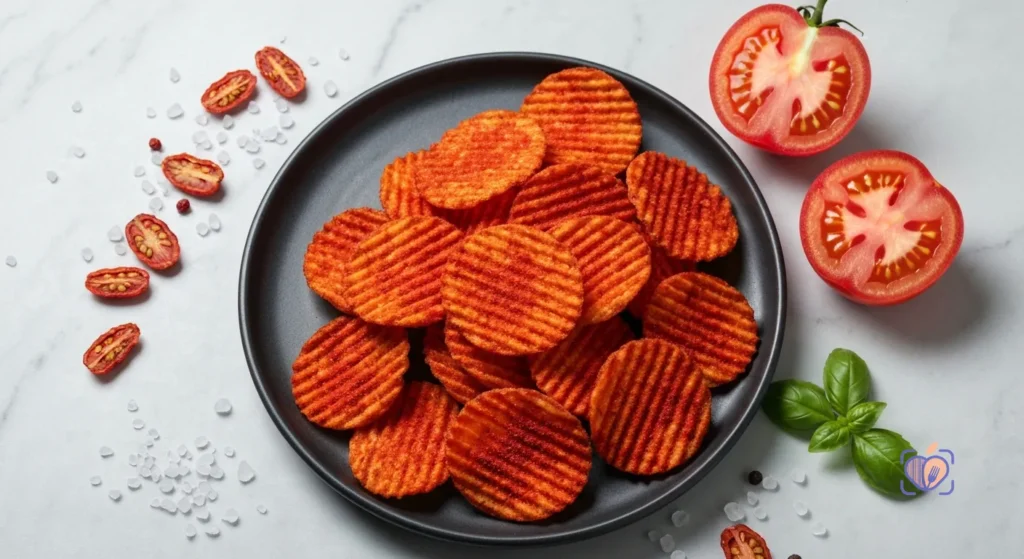
Lays Tomato Ketchup Chips are a flavored potato chip, primarily popular in Canada, celebrated for a distinctively sweet, tangy, and savory taste that aims to replicate the flavor of tomato ketchup. There’s a certain memory tied to that red-dusted fingertip. It’s the sound of a bag crinkling open on a dock, the sharp, sweet tang that cuts through a summer afternoon. It’s a flavor that isn’t just a flavor—it’s a feeling. A moment. Lays Tomato Ketchup Chips aren’t just a snack; for many, they are a core memory, a taste of home that’s both simple and deeply complex. But in advertising, and in life, we learn that the most compelling stories often have layers you don’t see at first glance. The Anatomy of a Craving What is it about this specific chip that captures the imagination? It’s a carefully engineered symphony. The initial hit is the sweetness, quickly followed by a bright, vinegary tang, and rounded out by the salty, fatty comfort of a perfectly fried potato chip. It’s a masterclass in food science, designed to hit every pleasure receptor in your brain. This experience, however, isn’t magic. It’s a formula. The Flavor Formula The ingredient list tells part of the story: specially selected potatoes, vegetable oil, and a seasoning blend. That blend is where the magic—and the mystery—happens. It contains sugar, salt, sodium acetate (for that vinegar hit), and natural and artificial flavors. These components are designed to create a product that is reliably, addictively delicious every single time. Beyond the Label: What Nostalgia Hides We live in an era of information, yet our food labels can feel like a foreign language. That bag of chips is more than just a snack; it’s a product of a complex food system. Many of our most beloved comfort foods fall into the category of ultra-processed foods, which are defined by their industrial formulations and extensive list of additives. Understanding this isn’t about fear; it’s about awareness. The real challenge is that the story doesn’t end with the ingredients you can pronounce. The term “natural flavors” can be a black box, and other additives might not align with your personal dietary goals, whether that’s avoiding dairy, gluten, or specific preservatives. A New Kind of Clarity The desire for transparency has led to a fundamental shift in how we shop. The rise of apps that scan and interpret food labels has put a new kind of power into the hands of consumers. People are no longer passive recipients of marketing; they are active participants in their own wellness, demanding to know more. But not all clarity is created equal. Many scanning apps offer a simple ‘good’ or ‘bad’ score, which frankly, is an insult to your intelligence. Life is not that simple. Your needs are personal. This is why we built Food Scan Genius. We don’t just scan; we translate. Our technology uses powerful AI to help decode food labels, but with a crucial difference. Food Scan Genius parses over 200 specific edge-case hidden labels—from cross-contamination warnings to ambiguous flavorings—to give you a detailed, personalized picture that aligns with your specific dietary needs and preferences. Don’t just wonder what’s behind the nostalgia. Know. Scan a bag of Lays Ketchup Chips with Food Scan Genius and see the full, unvarnished story for yourself. The power to choose has always been yours; we just provide the light. Take control of your grocery cart. Download Food Scan Genius for free. Download on the App Store Download on Google Play Frequently Asked Questions about Lays Tomato Ketchup Chips Are Lays Ketchup Chips vegan? In Canada, the formulation for Lays Ketchup Chips does not list any animal-derived ingredients, making them generally considered vegan. However, ingredient lists can change, and cross-contamination is always a possibility in facilities that handle dairy. To be certain, you should always scan the specific product with an app like Food Scan Genius. Where are Lays Tomato Ketchup Chips most popular? Lays Tomato Ketchup Chips are a cultural phenomenon in Canada. While they have appeared in other markets for limited runs, they are a permanent, beloved staple of the Canadian snack aisle. Why can’t I find Lays Ketchup Chips in the United States? Lays Ketchup Chips are not consistently distributed in the United States. Flavor popularity varies dramatically by region, and while the US market has a wide variety of chips, the ketchup flavor has never achieved the mainstream success it enjoys in Canada. Americans with a craving often have to buy them online or bring them back from a trip up north.

Lays Tomato Ketchup Chips: The Nostalgic Snack We Need to Talk About Read Post »

How Much Salt Is in Salted Butter? The Unspoken Number on the Label.

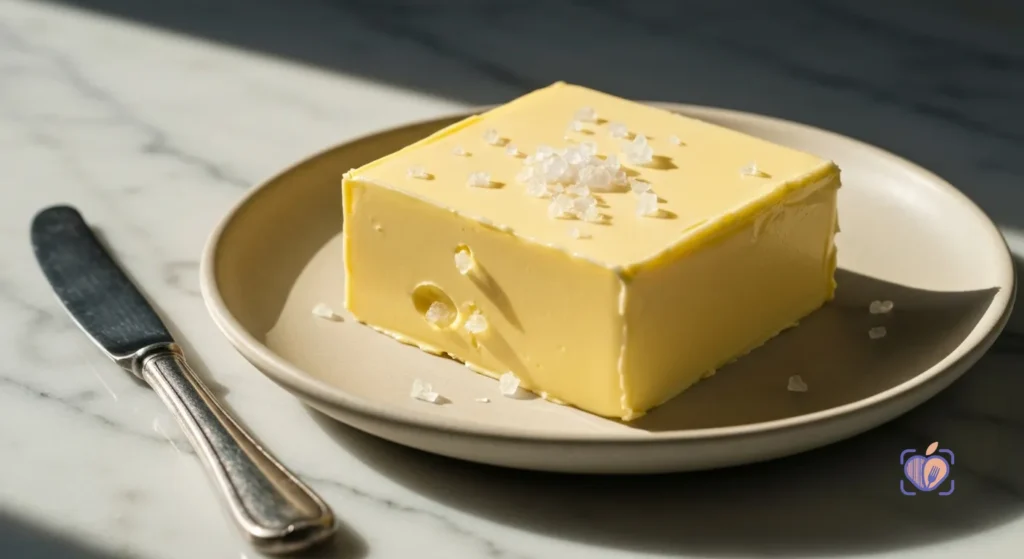
On average, salted butter contains between 1.6 to 1.75 grams of salt per 100 grams. This translates to roughly ¼ teaspoon of salt per ½ cup of butter, or about 90 milligrams of sodium per tablespoon. But that number is just an introduction. It’s the handshake before the meeting. It’s what they’re willing to tell you. The real story, as always, is in the details they leave out. The Numbers on the Label: A Starting Point, Not the Destination They give you a simple product. Cream, salt. It feels nostalgic. Honest. But the modern grocery aisle is not a place for nostalgia; it’s a battleground for your attention and loyalty. The amount of salt isn’t a universal constant. It’s a choice made in a boardroom. American vs. European Butter: A Tale of Two Tastes American-Style Salted Butter: Typically contains around 90-95 mg of sodium per tablespoon (about 1.7% salt by weight). It’s a straightforward product, designed for a consistent, familiar flavor. European-Style Salted Butter: Often has a higher fat content and can have a slightly lower or more variable salt level, sometimes using different types of salt crystals that change the perception of saltiness. This variation is the first clue that the label is just part of the story. The type of salt, the churning process, the fat content—it all changes the equation. It’s a simple question that deserves a simple answer, but you’re not being given one. Why Does Salt Content Matter? It’s Not About Taste. It’s About Time. We add salt for flavor, for preservation. But at what cost? People are fond of saying you should moderate your intake. But you can’t moderate what you can’t measure. The World Health Organization recommends a strict limit on daily sodium intake not to rob you of flavor, but to give you more time. More time for mornings with toast, for family dinners, for everything that matters. Managing sodium isn’t about sacrifice; it’s about control. And control begins with having the correct information, a principle that the experts at the Mayo Clinic will tell you is fundamental to managing your health. Beyond ‘Salt’: The Hidden Sodium You’re Not Seeing Here’s the truth they hope you’ll ignore: ‘salt’ is just one word. It’s the name on the door. But inside, there’s a whole party of sodium-based compounds you were never invited to meet. They hide in plain sight as preservatives and flavor enhancers, a common strategy in the world of ultra-processed foods that has quietly crept into even our most basic staples. This is where the real discrepancy lies. Not in the salt you can taste, but in the sodium you can’t see. That’s why we created Food Scan Genius. It’s a tool for people who believe they have a right to know what they’re eating. Our technology doesn’t just read the barcode; it deciphers the entire story. We parse over 200+ specific edge-case hidden labels for sodium and other additives that companies aren’t required to advertise. Stop guessing. Stop taking their word for it. It’s time to demand certainty. Get the truth in your hands. Download Food Scan Genius for free. Download on Google Play | Download on the App Store Your Questions About Salted Butter, Answered How much sodium is in a tablespoon of salted butter? A standard tablespoon of salted butter contains approximately 90 milligrams of sodium. However, this can fluctuate based on the brand, origin, and specific type of salt used. Is sea salt in butter healthier than regular table salt? While sea salt contains trace minerals, it has the same basic nutritional value and the same amount of sodium by weight as table salt. From a health perspective, the total amount of sodium consumed is the critical factor, not the type of salt. Can I use salted butter instead of unsalted in baking? Yes, but with caution. Most baking recipes are developed with unsalted butter to give the baker complete control over the salt content. If you use salted butter, you should reduce the amount of added salt in the recipe by approximately ¼ teaspoon for every ½ cup of butter used. How can I find the exact sodium content in my specific brand of butter? The nutrition label provides a baseline, but for a complete analysis that accounts for all sodium-containing ingredients, you need a more powerful tool. The Food Scan Genius app instantly analyzes labels to give you the precise data you need to make an informed choice, not just a guess.

How Much Salt Is in Salted Butter? The Unspoken Number on the Label. Read Post »

Cafe Rio Nutrition: The Definitive Data Breakdown for 2026

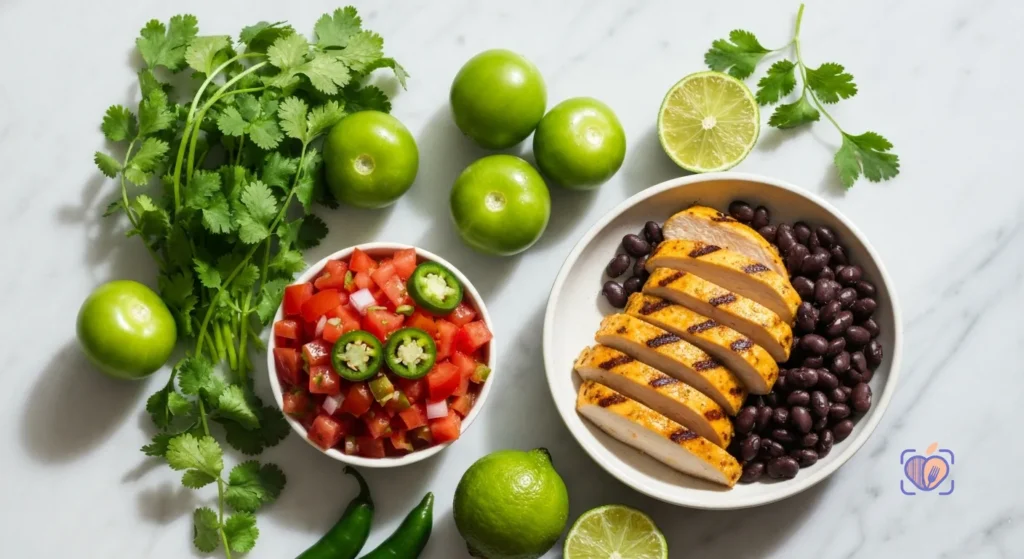
Cafe Rio provides nutrition information for its menu items primarily through an online calculator on its official website, which allows you to see nutritional values based on the specific ingredients you choose for your custom-built meal. The most accurate data is found by selecting each component of your order—from the tortilla to the protein, beans, rice, sauces, and toppings—to get a complete nutritional profile. As the VP of Product for NutriGraph, I spend my days analyzing food data ecosystems. The challenge with fast-casual dining like Cafe Rio isn’t a lack of food, it’s a lack of truly accessible and granular data. Consumers want fresh, customizable meals, but they’re flying blind when it comes to navigating calories, allergens, and additives. The provided calculators are a step in the right direction, but they’re a 2010 solution for a 2026 problem. Let’s break down the data properly. Table of Contents Toggle Deconstructing the Cafe Rio Menu: A Nutritional Deep Dive The Foundations: Burritos, Salads, and Tostadas Proteins & Fillings: The Core Macros Dressings and Toppings: The Hidden Saboteurs The Problem with Standard Nutrition Data The Developer’s Challenge: Building for Modern Health Needs Frequently Asked Questions about Cafe Rio Nutrition What is the healthiest meal at Cafe Rio? How many calories are in a Cafe Rio sweet pork burrito? Does Cafe Rio have gluten-free options? How can I get the most accurate nutrition data for my custom order? Related Posts Deconstructing the Cafe Rio Menu: A Nutritional Deep Dive The ‘build-your-own’ model is both a blessing and a curse. You have control, but every choice has a significant nutritional impact. A few small swaps can be the difference between a 600-calorie lunch and a 1,600-calorie feast. The Foundations: Burritos, Salads, and Tostadas Your starting choice sets the stage. A flour tortilla for a burrito immediately adds around 300 calories before you’ve even added a single filling. Choosing a salad as your base is often the smartest move, but it’s not foolproof. The fried tortilla shell of a tostada, for instance, can carry as many calories as a burrito wrap. Smart Swap: Opt for a bowl instead of a burrito or tostada to eliminate the high-calorie tortilla base. Proteins & Fillings: The Core Macros This is where you get your protein, but also a significant amount of fat and sodium. The famous Sweet Pork Barbacoa is delicious, but it’s also high in sugar and sodium. Grilled chicken or steak are typically leaner options. Black vs. Pinto Beans: Both are excellent sources of fiber, but pinto beans are often prepared with more fat. Black beans are usually the leaner choice. Cilantro Lime Rice: A staple, but it’s a significant source of simple carbohydrates. If you’re managing carb intake, consider going light or skipping it. Dressings and Toppings: The Hidden Saboteurs This is where a healthy meal can go completely off the rails. The creamy dressings, cheese, sour cream, and tortilla strips add up incredibly fast. Cafe Rio’s house creamy tomatillo dressing, while iconic, can add over 200 calories and 20g of fat per serving. Smart Swap: Ditch the creamy dressing for fresh pico de gallo or the low-fat tomatillo vinaigrette. Ask for cheese and sour cream on the side to control your portions. The Problem with Standard Nutrition Data Official calculators provide a baseline, but they fail to serve the modern consumer who has specific and often critical dietary needs. They don’t account for hidden additives, potential cross-contamination, or nuanced dietary protocols. General guidance from trusted health authorities like the Mayo Clinic emphasizes whole foods and understanding ingredients, which is difficult when data is presented in a clunky, incomplete interface. This gap is where innovation must happen. Consumers today demand more than what the baseline regulations from the FDA require. They want to know not just if a product contains wheat, but the specific derivatives. They want to avoid not just ‘sugar,’ but high-fructose corn syrup and artificial sweeteners. This trend is so powerful that even major grocery chains are integrating advanced dietary apps to stay competitive, a clear signal that shoppers’ needs are evolving beyond simple calorie counting. The Developer’s Challenge: Building for Modern Health Needs If you’re a developer building a health, wellness, or diet app, you’ve hit this data wall. You’re forced to rely on scraping outdated PDFs, using crowd-sourced (and often incorrect) data, or attempting to maintain a byzantine database of restaurant menu items yourself. Your users churn because your app can’t give them the reliable, granular intelligence they need to eat out confidently. This is the exact problem we built the NutriGraph API to solve. We provide developers with the world’s most advanced Allergen & Additive Intelligence. We’ve done the painstaking work of parsing, verifying, and enriching menu data so you can deliver an experience that truly serves your users. Stop wrestling with data and start building features that matter. Integrate the modern standard for food data and empower your users. Claim your 10,000 free calls to the NutriGraph API and see the difference precise, reliable data makes. API Docs & Registration: NutriGraph API Frequently Asked Questions about Cafe Rio Nutrition What is the healthiest meal at Cafe Rio? The healthiest meal is typically a custom-built salad or bowl. Start with greens, add a lean protein like grilled chicken, load up on black beans and fajita vegetables, and use pico de gallo or the light vinaigrette as your dressing. Avoid the tortilla, creamy dressings, cheese, and sour cream to keep calories and fat low. How many calories are in a Cafe Rio sweet pork burrito? A standard Cafe Rio sweet pork burrito can range from 1,000 to over 1,500 calories, depending on your choices of rice, beans, sauces, and toppings. The sweet pork itself is higher in calories and sugar than other proteins, and a smothered-style burrito with sauce and cheese will be at the higher end of that range. Does Cafe Rio have gluten-free options? Yes, Cafe Rio has many ingredients that are naturally gluten-free, including their proteins, beans,

Cafe Rio Nutrition: The Definitive Data Breakdown for 2026 Read Post »

About us

Food Scan Genius is an offering from ScanGeni Ventures Pvt Ltd, an ‘AI first’ company driving value for the next generation of consumers. Get in touch with us to learn more:

© 2025 All rights reserved by ScanGeni Ventures Private Limited

Scroll to Top