1. What Grain-Free Dog Food Actually Means
Grain-free dog food replaces conventional cereal grains like wheat, corn, and rice with alternative carbohydrates such as peas, lentils, or potatoes. It provides energy, but it is not inherently lower in carbohydrates or universally superior for dogs.
Standing in the pet food aisle, it is easy to assume that removing grains automatically transforms a formula into a high-protein, meat-heavy diet. In reality, commercial dry kibble requires starch to expand, bind, and hold its structural shape through the manufacturing extrusion process. When a pet food manufacturer removes corn, wheat, or barley, they must introduce another starch to take its place. These substitutes typically include legumes (such as whole green peas, chickpeas, and lentils) or tubers (such as sweet potatoes, russet potatoes, and tapioca starch).
As a result, many grain-free diets contain carbohydrate levels comparable to—or even higher than—traditional grain-inclusive formulas. Carbohydrate content rarely appears on the guaranteed analysis panel, but it frequently comprises 30% to 50% of the total dry matter in grain-free kibble. For pet owners, the critical task is not simply checking whether grains are absent, but identifying exactly what ingredients have been used to replace them and what nutritional role those ingredients serve.
2. Ingredient Order and the Reality of Ingredient Splitting
The ingredient list on a dog food package is organized by weight prior to cooking, as mandated by pet food labeling regulations. This rule creates an important distinction between whole, fresh meats and dry meat meals. A whole protein source, such as deboned chicken or fresh salmon, contains roughly 70% water. Once that raw meat undergoes the high-heat cooking process that creates dry kibble, the moisture is driven off, leaving behind only a fraction of its original weight. Consequently, a fresh meat listed as the first ingredient may actually contribute far less total protein to the finished product than concentrated dry meals listed further down the panel.
A common formulation practice designed to influence ingredient order is known as ingredient splitting. A manufacturer might formulate a recipe with a substantial volume of peas, but divide that component across multiple distinct entries on the label—such as whole peas, pea flour, pea protein, and pea fiber. Because each fraction is weighed individually prior to batching, none of them weighs enough to surpass the whole fresh meat at the top of the list.
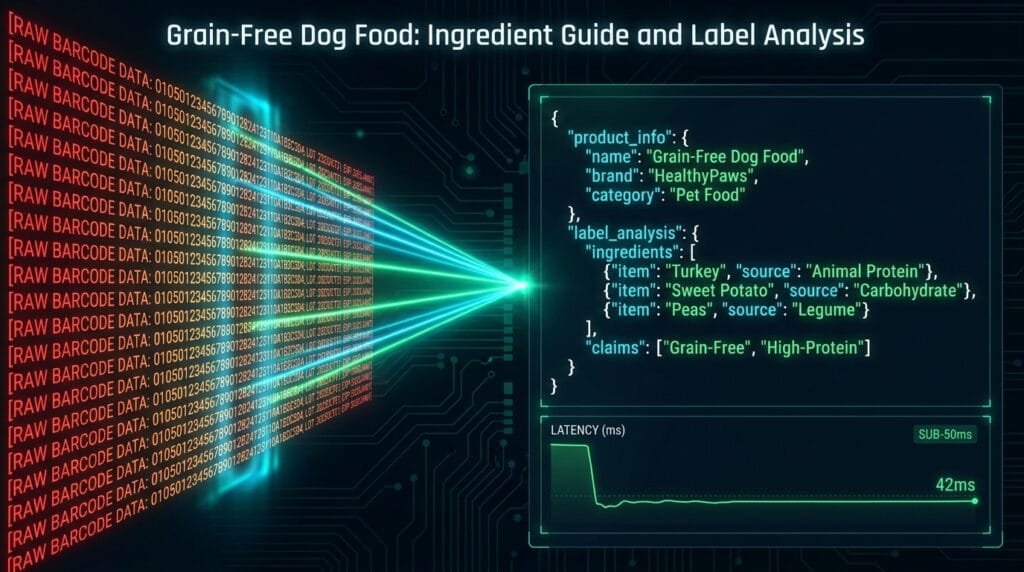
When combined, however, those split legume fractions may represent the dominant source of volume and protein in the bag. Using Pet Scan Genius allows you to scan a bag’s barcode in the aisle to aggregate split ingredients and see the true collective balance between animal-derived nutrients and plant-based protein fractions.
3. Evaluating Quality: Meat Meals, By-Products, and Fillers
Understanding the difference between specific and ambiguous naming conventions is essential when assessing whether a grain-free formula provides adequate animal nutrition. Specificity is the clearest indicator of sourcing control. Ingredients designated by an exact species—such as chicken meal, lamb meal, or menhaden fish meal—indicate that the animal source is tightly regulated. In contrast, generic terms like ‘animal meal’, ‘poultry meal’, or ‘meat and bone meal’ allow manufacturers to change their sourcing batch-by-batch based on commodity market pricing, leading to nutritional variability between bags.
The word ‘by-product’ is widely misunderstood in commercial pet food marketing. According to the Association of American Feed Control Officials (AAFCO), clean poultry by-products include nutrient-dense organs such as the heart, liver, gizzard, and kidneys, which deliver essential vitamins and minerals that muscle meat alone lacks. The concern lies not with clean, species-named organ meats, but with undefined by-product meals and low-quality binding agents used solely to bulk up the product.
Fillers serve primarily to increase bulk, alter stool consistency, or lower manufacturing costs without offering significant nutritional value. Common examples include powdered cellulose, excessive beet pulp, and chemically modified starches. When inspecting a grain-free recipe, verify that concentrated fats are also clearly defined—for example, ‘chicken fat preserved with mixed tocopherols’ rather than generic ‘animal fat’—to ensure the lipid source is stable and traceable.
4. Decoding the Guaranteed Analysis and AAFCO Statements
The guaranteed analysis panel lists the minimum percentages of crude protein and crude fat, alongside the maximum percentages of crude fiber and moisture. Because dry foods typically contain up to 10% moisture while canned foods contain 75% to 80%, you cannot directly compare their nutrient percentages as printed. To find the true concentration of nutrients, you must convert the figures to a Dry Matter Basis (DMB) by subtracting the moisture percentage from 100% and dividing each nutrient percentage by the remaining dry fraction.
Equally critical is the AAFCO nutritional adequacy statement, tucked in small print near the ingredient panel. This statement generally confirms nutritional value in one of two ways: ‘formulation’ or ‘feeding trials’. A formulation statement reads that the food is ‘formulated to meet the nutritional levels established by the AAFCO Dog Food Nutrient Profiles’. This means the recipe was calculated on paper or in a laboratory to meet baseline numbers, but was not necessarily tested in live animals before reaching commercial shelves.
A feeding trial statement reads that ‘animal feeding tests using AAFCO procedures substantiate’ that the product provides complete nutrition. This confirms the diet was fed to dogs under monitored protocols to ensure real-world digestibility and palatability. Additionally, check the targeted life stage: a formula labeled for ‘All Life Stages’ must meet the higher nutrient minimums required for growing puppies, which may deliver more calories and calcium than an inactive senior dog requires.
5. Health Considerations, DCM, and Clinical Vet Care
Grain-free diets have drawn significant veterinary scrutiny following investigations by the U.S. Food and Drug Administration (FDA) regarding a potential correlation with canine Dilated Cardiomyopathy (DCM). DCM is a serious heart muscle condition that historically afflicted specific genetically predisposed breeds. Over the past decade, cases appeared in non-predisposed breeds that were consistently fed diets featuring heavy concentrations of pulse legumes—such as peas, lentils, and chickpeas—or potatoes as primary ingredients.
Veterinary researchers are actively studying whether these high pulse concentrations interfere with the bioavailability of taurine, an amino acid vital for cardiac function, or if specific ingredients introduce compounds that disrupt myocardial health. If your dog exhibits lethargy, weakness, coughing, or difficulty breathing, schedule a clinical cardiac evaluation with your veterinarian immediately.
Owners also frequently switch to grain-free food under the assumption that grains cause food allergies. Clinically, confirmed canine food allergies are overwhelmingly triggered by animal proteins—specifically beef, dairy, and chicken—rather than grains. If your dog shows signs of skin disease, chronic ear infections, or digestive distress, consult a veterinarian for a structured elimination diet. Avoid guessing at clinical problems through retail aisle substitutions, and seek emergency veterinary care or a pet poison hotline immediately if your dog ingests toxic human foods like onions, grapes, or xylitol.
6. How to Make a Practical Decision in the Aisle
Choosing the right food requires looking past front-of-bag marketing terms like ‘holistic’, ‘ancestral’, or ‘pure’ and examining the quantifiable components of the recipe. First, check that animal proteins occupy the primary spots on the panel, ideally with a named meat meal following a fresh meat to guarantee concentrated protein density after dehydration. Second, inspect the middle of the label to verify that legumes or potatoes are not repeated under multiple technical names to mask their total volume.
Next, confirm that the AAFCO statement aligns directly with your dog’s age and activity level rather than defaulting to a generic all-life-stages blend. If your dog has a sensitive stomach, pancreatitis, kidney disease, or requires a calorie-restricted regimen, commercial grain-free diets can introduce elevated fat or mineral profiles that worsen these conditions. In all clinical situations, dietary choices must be reviewed directly with your veterinarian.
By using Pet Scan Genius, you can instantly scan a product’s barcode to match its precise macronutrient ratios, split ingredients, and pulse concentrations against your dog’s breed, age, and lifestyle parameters. While the tool helps you navigate confusing labeling strategies, it informs your decision rather than making it for you—giving you the data needed to choose the appropriate fuel for your animal.
Check the bag before you buy it. Pet Scan Genius reads a pet food label and explains what the ingredients mean for your animal by breed, age, weight and health conditions.
Frequently asked questions
Is grain-free dog food healthier for all dogs?
No, grain-free dog food is not universally healthier. Unless a dog has a medically diagnosed sensitivity to a specific grain, whole grains like brown rice and oats provide digestible energy, essential fatty acids, and fiber. For most dogs, grain-inclusive foods with quality protein sources are completely healthy.
Why do pet food brands use peas and lentils instead of grains?
Peas, lentils, and chickpeas provide the starch required to bind dry kibble into pellets during the extrusion process. They also contribute significant plant-based protein and dietary fiber at a lower wholesale cost than whole animal meats, helping manufacturers hit target protein percentages on the label.
What is the difference between meat meal and fresh meat?
Fresh meat includes moisture—roughly 70% water by weight—which cooks away during kibble production, reducing its actual contribution to the final food. Meat meal is meat that has already been rendered and dried, resulting in a concentrated protein source containing around 10% moisture before batching.
How can I tell if my dog actually has a grain allergy?
True grain allergies are rare in dogs and must be diagnosed by a licensed veterinarian using an eight to twelve-week veterinary elimination diet trial. Most canine food allergies are caused by animal proteins such as beef, chicken, or dairy rather than wheat, corn, or rice.
This article is general information, not veterinary advice. Talk to your vet about your own animal.