1. What Grain-Free Dog Food Means on the Label
Grain-free dog food replaces cereal grains like corn, wheat, barley, and rice with alternative carbohydrate sources, primarily pulses and tubers like peas, lentils, chickpeas, or sweet potatoes. It provides energy and dietary fiber without using conventional agricultural grains.
Standing in the store aisle, it is easy to assume that removing grains automatically removes carbohydrates or creates a biologically superior diet. In commercial kibble manufacturing, however, starch is a structural necessity. The high-heat extrusion process requires a starch binder to expand and hold the kibble matrix together. When manufacturers eliminate cereal grains, they do not replace them with pure meat; they replace them with alternative starches such as tapioca, potato starch, yellow peas, or green lentils. The final carbohydrate percentage of a grain-free formula often rivals or exceeds that of a grain-inclusive formula, sitting between 30% and 50% on a dry-matter basis.
Nutritional science demonstrates that domestic dogs are facultative carnivores equipped to digest complex carbohydrates. Unlike wild wolves, domestic canines possess multiple copies of the AMY2B gene, which codes for pancreatic amylase. This evolutionary adaptation allows dogs to break down and assimilate properly cooked starches from both grains and tubers. Selecting a grain-free diet solely under the impression that dogs cannot process grains misunderstands canine metabolic physiology. Grain-free is a formulation choice, not an inherent marker of purity or nutritional quality.
2. Decoding the Ingredient Deck: Order, Water Weight, and Splitting
Ingredient lists on pet food bags are regulated by weight in descending order before cooking. This regulatory rule creates opportunities for deceptive label architecture that every pet owner should recognize. A bag may proudly list “deboned chicken” as the first ingredient. While real chicken is an excellent animal protein, raw chicken contains roughly 70% water. Once that meat enters the high-temperature extruder and the moisture cooks away, its actual contribution to the food’s total mass drops significantly, often tumbling out of the top spot in dry-weight terms.
Conversely, concentrated dry ingredients listed further down the deck can carry a disproportionate amount of the formula’s total mass. This is where a common formulation practice known as ingredient splitting comes into play. A manufacturer might formulate a recipe containing high amounts of peas. If listed as a single ingredient, “peas” would outweigh the meat and sit first on the label. To avoid this, the manufacturer splits the component across several distinct sub-ingredients: yellow peas, pea protein, pea flour, and pea fiber. Because each sub-item is weighed separately before mixing, each individual fraction weighs less than the whole chicken, allowing the deboned chicken to maintain the coveted first spot on the panel.
Understanding this balance requires cross-referencing the ingredient deck with the guaranteed analysis. When you scan a bag using Pet Scan Genius, the software parses these segmented fractions to calculate the total estimated pulse or carbohydrate load against your dog’s specific profile, exposing whether the primary source of dietary protein originates from animal muscle or processed legume derivatives.
3. Failure Modes: Ambiguous Meals, By-Products, and Fillers
Not all concentrated proteins are created equal, and grain-free formulas can cut corners just as aggressively as budget grain-based foods. High on the list of concerns is the use of ambiguous, unnamed rendered meals. A clearly defined meal, such as “salmon meal” or “lamb meal,” consists of clean, rendered tissue derived from the named species with the water removed, offering a dense source of amino acids. In contrast, terms like “animal meal,” “meat meal,” or “poultry meal” indicate non-specific, blended protein sources where raw material provenance cannot be verified from lot to lot. These ambiguous meals make it impossible to track down triggers if an animal exhibits a reaction.
The word “by-product” often receives unearned criticism, but its handling requires nuance. By-product meals derived from named species (such as chicken by-product meal) can contain highly nutritious organ meats like livers, kidneys, and hearts, which offer rich concentrations of bioavailable vitamins A, B-complex, iron, and taurine. However, unground by-products that include excessive connective tissue, bone, or intestinal tissue can skew the mineral balance, driving up crude ash levels and elevating dietary phosphorus. Elevated phosphorus places unnecessary filtration stress on animals with subclinical renal limitations.
True fillers in grain-free foods are functional starches stripped of their broader micronutrient profiles. Refined pea starch, modified potato starch, and powdered cellulose serve to bind the kibble and artificially elevate crude fiber on the guaranteed analysis panel. These additives contribute virtually zero essential fatty acids or micronutrients. If a grain-free bag lists a meat meal followed by three distinct pulse or purified starch derivatives, the recipe relies heavily on non-meat constituents to meet its minimum crude protein requirement.
4. Understanding the AAFCO Statement and Heart Health Considerations
Every pet owner holding a bag should turn it over to locate the Association of American Feed Control Officials (AAFCO) statement. This statement tells you whether the diet is complete and balanced, and how that claim was substantiated. A diet that is “formulated to meet” nutritional levels has been cross-checked mathematically against nutrient profiles on paper or through laboratory assay, but it has not been tested in live feeding trials. A diet validated through “AAFCO feeding trials” has been fed to real dogs under structured protocols to verify nutrient bioavailability, palatability, and absence of overt deficiencies over time.
The life stage specified in this statement is critical. A formula labeled for “Growth” or “All Life Stages” carries significantly higher minimums for crude fat, calcium, and phosphorus than an “Adult Maintenance” diet. Feeding an all-life-stages grain-free food with an improper calcium-to-phosphorus ratio to a large-breed puppy can lead to rapid, abnormal skeletal growth. Conversely, feeding a low-protein, maintenance-only diet to an active working dog can result in muscle catabolism.
In recent years, the FDA initiated investigations into potential links between non-hereditary canine dilated cardiomyopathy (DCM) and diets containing high proportions of peas, lentils, other legume seeds, or potatoes as main ingredients. While research is ongoing and multi-factorial, taurine deficiency and altered amino acid bioavailability are key focus areas. If you have concerns regarding DCM, cardiac screening, or complex dietary transitions, consult a board-certified veterinary nutritionist or your primary veterinarian. Never attempt to treat or diagnose cardiac symptoms through retail dietary adjustments.
5. How to Evaluate a Bag in the Pet Food Aisle
When standing in the aisle deciding whether to buy a specific grain-free formula, run through a structured mathematical and structural checklist on the spot:
- Calculate Dry-Matter Carbohydrates: Add the percentages for crude protein, crude fat, crude fiber, and moisture listed on the guaranteed analysis. Subtract that total from 100%. The remaining number is an estimate of carbohydrates plus ash (ash typically accounts for 6% to 8%). If the result exceeds 40%, the food is high in carbohydrates, regardless of whether it contains grain.
- Audit the First Six Ingredients: The first six items dictate the bulk of the food’s material cost and nutritional base. Ensure that animal proteins appear predominantly, and verify that pulse fractions (pea starch, pea protein, pea fiber) are not repeating sequentially.
- Identify the Specific Fat Source: Look for clearly named lipid sources like “chicken fat” or “sunflower oil” rather than generic “animal fat.” Fat preservation should rely on mixed tocopherols rather than synthetic preservatives like BHA, BHT, or ethoxyquin.
- Verify Named Protein Sources: Avoid any bag listing generalized terms like “meat and bone meal” or “fish meal” without specifying the exact species.
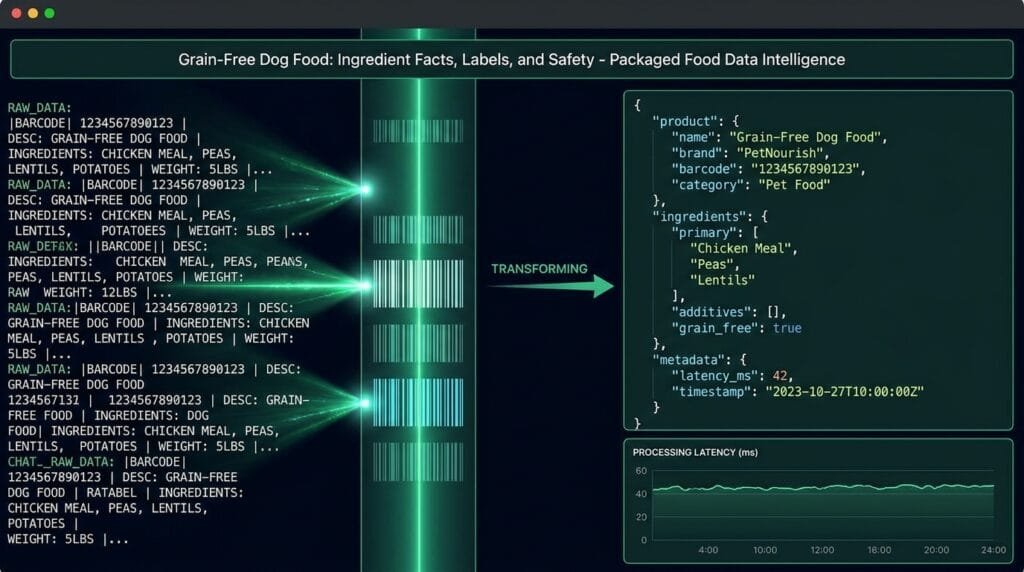
Using Pet Scan Genius allows you to scan the barcode right in the aisle to analyze complex ingredient arrays against your dog’s age, breed, and weight. The app provides clarity on what the formula actually delivers, but because every dog’s gastrointestinal tract, metabolic rate, and health profile are unique, the data serves as a guide for your decision, not an absolute guarantee of tolerance or safety.
If you suspect your dog has an actual food allergy, it is important to know that true canine food allergies are usually triggered by common animal proteins such as beef, dairy, or chicken, rather than grains. For clinical conditions like severe cutaneous adverse food reactions, pancreatitis, or kidney disease, work alongside your veterinarian to select an appropriate therapeutic or veterinary-supervised diet.
Check the bag before you buy it. Pet Scan Genius reads a pet food label and explains what the ingredients mean for your animal by breed, age, weight and health conditions.
Frequently asked questions
Is grain-free dog food inherently healthier for all dogs?
No. Grain-free dog food is not universally superior. Unless a dog has a medically diagnosed sensitivity to a specific grain, grain-inclusive foods with whole grains like oats, brown rice, or barley offer balanced energy, essential B vitamins, and healthy dietary fiber.
What ingredients replace grains in grain-free kibble?
Manufacturers replace grains with alternative carbohydrate sources to provide structural starch for kibble processing. Common replacements include field peas, chickpeas, lentils, sweet potatoes, tapioca starch, and white potatoes.
How can I tell if a grain-free food is using pulse splitting?
Review the ingredient deck for multiple appearances of the same base crop, such as whole peas, pea protein, pea flour, and pea fiber. If multiple variants of a single pulse appear within the first several ingredients, the recipe likely contains more total pulse content than the meat source listed first.
Can grain-free food help with my dog’s chronic itching?
It depends on the underlying cause. True canine food allergies are typically triggered by animal proteins like chicken or beef, not grains, while environmental allergies are even more common. If your dog suffers from chronic itching, consult a veterinarian to run systematic elimination trials rather than self-treating with retail diets.
This article is general information, not veterinary advice. Talk to your vet about your own animal.