
1. Why Finding Keto Friendly Cereals Is So Frustrating in 2026
If you have ever stood in the cereal aisle with your phone calculator open, you know the feeling. The front of the box says “keto,” “low carb,” or “zero sugar,” yet the nutrition panel tells a more complicated story. Breakfast is the meal many people on a ketogenic or low-carb plan miss most, and cereal is the food they most want back. The frustration is real, and it is not a failure of willpower. Marketing language has simply moved faster than labeling rules.
One reason is that “net carbs” is not a term the FDA defines. Each brand picks its own formula, usually total carbohydrates minus fiber minus some or all sugar alcohols. Two boxes that both claim 4 g net carbs can behave very differently in your body, depending on which fibers and sweeteners fill that gap. Clinically, people managing type 2 diabetes, insulin resistance, or epilepsy-related ketogenic therapy often need more precision than a front-of-box claim provides. Always work with your physician or registered dietitian on your carbohydrate targets.
Then there is the allergen layer. Most modern keto cereals replace grains with milk protein, almonds, coconut, soy, or wheat gluten, and each of those is a potential problem for someone. Under the FDA Food Allergen Labeling & Consumer Protection Act (FALCPA), major allergens must be declared in plain language. That protection does not tell you whether a product fits a low-carb plan, a nut-free household, or a gluten-free diet at the same time.
Finally, many of these products are heavily formulated. Research summarized in PubMed Research on Ultra-Processed Foods & Gut Microbiome Disruption has raised questions about how highly processed diets may affect gut health. That does not make every keto cereal a bad choice. It does mean a low carb count alone should not be the only thing you check, and that is why a more complete label audit matters.
Scan Any Label for Hidden Additives and Allergens — Free
Never second-guess confusing grocery labels again. Download Food Scan Genius to uncover hidden additives, toxic dyes, and allergens for the whole household before you buy.


2. Sneaky Ingredients and Label Loopholes in Keto Cereals
The best keto friendly cereals are not the ones with the loudest claims. They are the ones whose full ingredient lists hold up when you read past the front panel. Here are the most common places where the numbers and the reality drift apart:
- Elastic “net carb” math: Because net carbs are not regulated, a brand may subtract every gram of fiber and sugar alcohol, even ones the body partly absorbs. Compare total carbohydrate, fiber, and sugar alcohol lines yourself.
- Partially digestible fibers: Ingredients such as isomaltooligosaccharides (IMO), soluble corn fiber, and some resistant starches are counted as fiber, but individual glucose responses vary. If you track your glucose, test a new cereal before making it a staple.
- Maltitol and other sugar alcohols: Maltitol has a noticeably higher glycemic impact than erythritol or allulose, and large amounts of sugar alcohols can cause digestive upset. Look at which one appears and how high it sits in the ingredient list.
- Small serving sizes: A 30 g serving can make a cereal look very low-carb, but many people pour two or three times that. Multiply the panel by your real bowl.
- Hidden allergens and gluten sources: Wheat protein isolate, milk protein, almonds, soy lecithin, and tree-nut flours are common. FALCPA requires the major allergens to be declared, but it does not guarantee a product suits your household’s full set of restrictions.
- Refined seed oils and additive stacks: Some cereals use sunflower, canola, or soybean oil, plus gums, colors, and high-intensity sweeteners such as sucralose or acesulfame potassium. Sweetener and additive rules differ by region, so see the European Food Safety Authority (EFSA) Additive Safety Regulations for how the EU evaluates them.
Fat quality also deserves a glance, since many keto cereals use coconut oil or butter-based binders. The World Health Organization Guidelines on Healthy Diets & Saturated Fats recommend limiting saturated fat intake as part of an overall healthy diet. This is useful context if you eat these cereals daily, and your clinician can help you balance it with your goals.
When you shop, the strongest options usually fall into a few categories: protein-based puffed cereals, nut-and-seed clusters, grain-free granolas, and simple “porridge” mixes built from hemp hearts, chia, flax, and coconut. Brands in these groups change recipes often and flavors differ, so treat any list of picks, including ours, as a starting point and verify the box in your hand.
3. Food Scan Genius vs. Other Ways to Vet Keto Cereals
| Feature | Food Scan Genius | Fig | Spoonful | Manual Label Reading |
|---|---|---|---|---|
| Cost | 100% free core features, no paywalls | Around $59/yr for full access | Limited scans | Free, but time-intensive |
| Ingredient Depth | NutriGraph: 5M+ verified barcodes, recursive sub-ingredient parsing | Ingredient-based screening | Ingredient-based screening | Depends on your own knowledge |
| Diet Profiles | 39 profiles plus custom sensitivities (seed oils, dyes, additives) | Preset profiles; check current options | Preset profiles; check current options | Whatever you remember |
| Family Screening | Whole household in one scan, with named results like “Fails for Sri (Gluten)” | Varies by plan | Varies by plan | One person, one label at a time |
| Languages | 11 languages with real-time in-app translation | Check current availability | Check current availability | Only the language printed on the box |
Keto cereals are a good test of why surface-level scanning falls short. A single box may list a “protein blend,” a “fiber blend,” or a “natural flavor,” and each of those can contain several sub-ingredients. Food Scan Genius is powered by the NutriGraph Database, which covers more than 5,000,000 verified UPC/EAN barcodes and uses recursive parsing to break compound ingredients down into their components. That is how a hidden wheat protein, a milk derivative, or a specific seed oil gets flagged, even when it sits inside a nested ingredient.
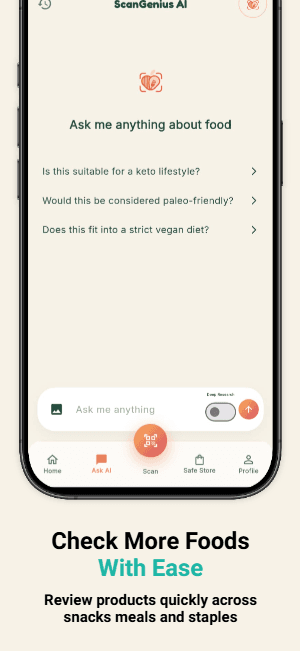
The ScanGenius AI Insight then adds context rather than a single good-or-bad grade. You see the NOVA 1-4 classification and Nutri-Score alongside plain-language notes, such as which sweetener is driving the carb count and why a fiber source may behave differently from one person to the next. With 39 dietary profiles, custom sensitivities, and multi-household family profiles, one scan can tell you the cereal works for your keto plan but fails for another family member, without moralizing about your choices.
4. Related Food Safety & Dietary Guides
- Best Food Allergy Scanner App – Scan Food Labels Instantly — Food Allergy & Sensitivity Scanner Hub
- The 7 Best Free Food Scanner Apps of 2026 — best free food scanner apps
- Choosing the Best Barcode Scan App for Your Health — guide to choosing a barcode scanner app
- Food Scan Genius: World’s #1 Food Ingredient Scanner App — Food Scan Genius scanner app
5. Scientific & Health Authority References
- FDA Food Allergen Labeling & Consumer Protection Act (FALCPA)
- European Food Safety Authority (EFSA) Additive Safety Regulations
- PubMed Research on Ultra-Processed Foods & Gut Microbiome Disruption
- World Health Organization Guidelines on Healthy Diets & Saturated Fats
6. How to Scan in 3 Simple Steps
- Download Food Scan Genius free on iOS or Android. There is no paywall on core features, and you can switch the app into any of 11 languages.
- Set up your profile: choose the keto or low-carb dietary profile, then add custom sensitivities such as seed oils, artificial dyes, maltitol, or a specific allergen. Add family members to create named household profiles.
- Scan the cereal barcode and get results in about 2 seconds, including per-person pass or fail notes, NOVA and Nutri-Score context, and an ingredient audit trail you can review before buying.
Instant Keto & Sugar Audit Trail
7. Frequently Asked Questions (FAQ)
What makes a cereal truly keto friendly?
There is no regulated definition, so it comes down to the numbers and ingredients on the label. Most people look for roughly 5 g of net carbs or fewer per realistic serving, but your target should come from your clinician. Check total carbohydrates, fiber, sugar alcohols, and serving size, then review the ingredients for sweeteners and fibers you tolerate well. Food Scan Genius reads these details from the NutriGraph Database and applies your keto profile and custom sensitivities in one scan.
Are keto friendly cereals healthy to eat every day?
It depends on the product and on you. Some are simple blends of nuts, seeds, and coconut, while others are highly processed with multiple sweeteners and additives. Research on ultra-processed foods suggests variety and ingredient quality matter. ScanGenius AI Insight shows the NOVA 1-4 classification and Nutri-Score so you can see how processed a cereal is without being handed a simplistic moral score. Talk to your healthcare provider if you have a medical condition.
Can I screen a keto cereal for my whole family at once?
Yes. Food Scan Genius supports multi-household family profiles, so one scan checks the product against everyone’s dietary needs. If a cereal fits your keto plan but contains wheat gluten that affects another family member, the result names the person and the reason, such as “Fails for Sri (Gluten).” Allergen declarations under FALCPA are a helpful baseline, but the app combines them with each person’s specific profile.
Is Food Scan Genius really free for checking keto friendly cereals?
Yes. Core features, including barcode scanning, the 39 dietary profiles, custom sensitivities, family profiles, and the 11 supported languages, are free with no paywalls. That differs from subscription-based apps such as Fig, which is around $59 per year, or tools that cap the number of scans. You can scan every cereal box on the shelf, compare options, and decide before you buy.
Know What’s In Your Food Before You Buy — Scan Free Today
Never second-guess confusing grocery labels again. Download Food Scan Genius to uncover hidden additives, toxic dyes, and allergens for the whole household before you buy.
Related guides