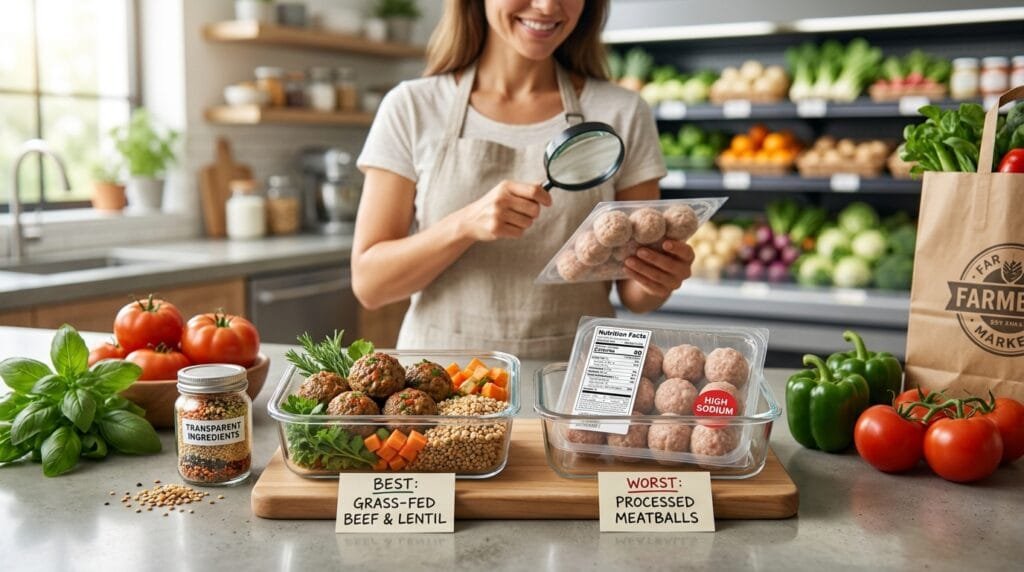
1. The Supermarket Meatball Minefield: Why Balancing Nutrition and Allergen Safety Is Harder Than Ever
Standing in the frozen foods aisle, turning over a bag of ready-to-heat homestyle meatballs, you might reasonably assume you are holding seasoned ground beef, breadcrumbs, and herbs. Yet for millions of shoppers managing cardiometabolic wellness, celiac disease, or pediatric food allergies, evaluating meatballs nutritional value has become an exhausting cognitive burden. Commercial meat processing in 2026 relies heavily on hyper-palatable formulations, where lean muscle protein is often displaced by textured soy concentrates, hydrolyzed proteins, transglutaminase (‘meat glue’), and inflammatory seed oils to artificially boost yield while minimizing production overhead.
The health consequences of these industrial shortcuts are far from benign. According to World Health Organization Guidelines on Healthy Diets & Saturated Fats, limiting saturated fat to under 10% of total caloric intake and tightly managing dietary sodium is non-negotiable for vascular longevity. Unfortunately, a single 3-ounce serving of standard grocery store meatballs can saturate up to 60% of your daily sodium ceiling and half your saturated fat allowance, leaving virtually no buffer for the pasta sauce or grains paired with them.
For families managing autoimmune conditions or anaphylaxis, the stakes shift from chronic risk to acute danger. The Food Allergy Research & Education (FARE) Clinical Standards highlight that milk, eggs, wheat, and soy represent four of the most critical elicitors of pediatric and adult allergic reactions—and conventional store-bought meatballs frequently contain all four. Casein and whey act as moisture binders, commercial breadcrumbs supply gluten, dehydrated egg whites create bouncy tensile texture, and defatted soy flour pads out meat weight. When a food product blends four major systemic allergens into a processed slurry, the margin for human error while scanning fine-print ingredient declarations vanishes.
Scan Any Label for Hidden Additives and Allergens — Free
Never second-guess confusing grocery labels again. Download Food Scan Genius to uncover hidden additives, toxic dyes, and allergens for the whole household before you buy.


2. Unmasking Deceptive Processing: Sneaky Additives and the Real Nutritional Toll
Deciphering the true meatballs nutritional value requires looking past the glossy claims of ‘Traditional Family Recipe’ or ‘All-Natural Beef’ plastered across the front panel. Regulatory definitions allow manufacturers substantial leeway in disguising fillers, texturizers, and sub-ingredients under benign umbrella terms. When clinical researchers evaluate these formulations, they often encounter ultra-processed emulsifications designed to survive months of freezer storage without syneresis (weeping liquid) or oxidation.
Extensive PubMed Research on Ultra-Processed Foods & Gut Microbiome Disruption demonstrates that synthetic thickeners, modified starches, and recurring dietary phosphates alter commensal microflora and deteriorate mucosal barrier integrity. Furthermore, under European Food Safety Authority (EFSA) Additive Safety Regulations, many processing aids are continuously reviewed for biological persistence and immunogenic triggers, even while standard US commercial brands continue utilizing them without consumer-facing warnings.
- Mechanically Separated Poultry & Hidden Dairy: Many economical ‘beef’ or ‘Italian style’ meatballs contain secondary mechanically separated chicken or turkey slurries blended with sodium caseinate or whey powder. This drastically alters the lipid profile while introducing hidden milk derivatives.
- Modified Food Starches & Unlisted Gluten Carriers: Starch derivatives are incorporated to entrap free water and prevent shrinkage in pre-cooked meatballs. These often originate from corn, tapioca, or chemically treated wheat, presenting cross-contact hazards for individuals with severe gluten sensitivities.
- Hydrolyzed Plant Protein & Autolyzed Yeast Extracts: Deployed as flavor enhancers, these industrialized derivatives mask low-grade meat trimmings by dumping free glutamates and unmeasured sodium into the matrix without appearing as ‘Monosodium Glutamate (MSG)’ on the front label.
- Sodium Phosphates (STPP & TSP): Used as moisture retainers to preserve plumpness during par-frying and flash-freezing. Inorganic phosphate additives are absorbed far more efficiently by the human vascular system than organic food phosphates, posing renal and cardiovascular burdens.
- Textured Vegetable Protein (TVP) & Defatted Soy Flour: Highly refined soy isolates function as cheap bulking agents, dramatically cutting manufacturing costs while turning an ostensibly pure meat dish into a high-risk trigger for soy-allergic consumers.
- Deodorized Seed Oils (Canola, Cottonseed, Soybean): Meatballs naturally contain animal fats, yet factory fryers submerge them in refined polyunsaturated vegetable oils during pre-cooking steps to set structural crusts, adding oxidized fats and skewed Omega-6 profiles.
3. Cutting Through Grocery Guesswork: Food Scan Genius vs. Outdated Screening Methods
| Feature / Metric | Food Scan Genius | Fig App | Spoonful | Manual Label Reading |
|---|---|---|---|---|
| Core Pricing Model | 100% Free Core (No Paywall) | $59.99/yr Subscription | Freemium (Scan Limits) | Free (High Time Cost) |
| Database Depth | 5,000,000+ Barcodes (NutriGraph AST) | Proprietary US Database | Select Supermarket Data | Zero Automation |
| Multi-Person Screening | Yes (Single scan with named attribution) | Single User Focused | Single User Focused | Exhaustive Cross-Checking |
| Dietary Profiles & Custom Additives | 39 Profiles + Custom Sensitivity Engine | Broad Predefined Diets | FODMAP / Selected Diets | Subject to Human Oversight |
| Nutritional Processing Scoring | NOVA 1-4 + Nutri-Score + ScanGenius AI | Green/Yellow/Red Flags | Ingredient Suitability Match | None (Raw Facts Panel Only) |
Evaluating commercial meatballs shouldn’t require an advanced degree in biochemistry. While traditional label auditing forces consumers to squint at confusing micro-print, Food Scan Genius leverages its enterprise-grade NutriGraph Database—housing more than 5,000,000 verified global barcodes. Unlike static keyword matchers that miss parenthesized sub-ingredients (such as ‘seasoning (hydrolyzed soy protein, spices)’), the NutriGraph engine runs recursive Abstract Syntax Tree (AST) parsing. This isolates deep sub-tier allergens and processing aids instantly, ensuring nothing slips past undetected.
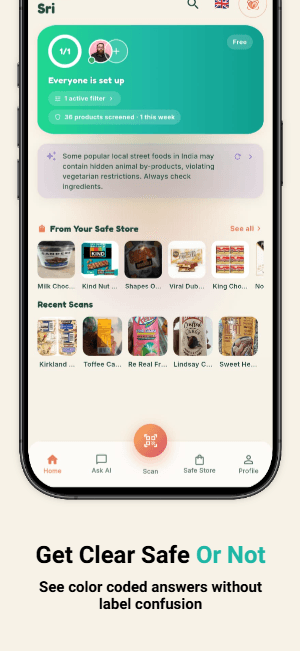
Instead of assigning a moralizing, arbitrary health score that lacks clinical context, the ScanGenius AI Insight engine provides clear, actionable parameters. By integrating verified NOVA 1-4 classification (identifying ultra-processed food matrices) alongside evidence-based Nutri-Score calculations, the app contextualizes the actual meatballs nutritional value. When screening for the entire family, the app’s multi-household profiles flag compound risks in a single 2-second scan—instantly noting: ‘Fails for Liam (Celiac/Gluten)’ while simultaneously warning parents of excessive saturated fat content or unlisted dairy binders.
4. Related Food Safety & Dietary Guides
- Best Food Allergy Scanner App – Scan Food Labels Instantly — Food Allergy & Sensitivity Scanner Hub
- The 7 Best Free Food Scanner Apps of 2026 — best free food scanner apps
- Choosing the Best Barcode Scan App for Your Health — guide to choosing a barcode scanner app
- Food Scan Genius: World’s #1 Food Ingredient Scanner App — Food Scan Genius scanner app
5. Scientific & Health Authority References
- Food Allergy Research & Education (FARE) Clinical Standards
- European Food Safety Authority (EFSA) Additive Safety Regulations
- PubMed Research on Ultra-Processed Foods & Gut Microbiome Disruption
- World Health Organization Guidelines on Healthy Diets & Saturated Fats
6. How to Scan in 3 Simple Steps
- Download the Food Scan Genius app for free on iOS or Android with zero subscription paywalls or scan quotas.
- Configure your household’s dietary profiles from 39 clinical baselines—or define custom sensitivities for seed oils, specific preservatives, or phosphate additives.
- Scan any meatball package barcode in 2 seconds to reveal a complete AST ingredient breakdown, NOVA processing tier, and personalized family safety alerts.
Instant Nut Allergen Audit Trail
7. Frequently Asked Questions (FAQ)
What is the typical meatballs nutritional value for standard store-bought brands?
On average, a 3-ounce (85g) serving of commercial frozen beef meatballs supplies 240-290 calories, 18-24g of total fat (including 7-10g of saturated fat), 500-680mg of sodium, and 14-18g of protein. When fillers like breadcrumbs and textured soy flour are added, carbohydrates climb to 6-10g per serving. Food Scan Genius scans the barcode to calculate exact macronutrient ratios and flags elevated sodium-to-protein imbalances immediately.
Why do commercial meatballs frequently contain hidden gluten and dairy?
Manufacturers utilize wheat-derived breadcrumbs, modified food starches, and dairy proteins (whey, sodium caseinate, and dry milk powder) as functional binders. These agents trap water, preserve softness during freezing, and reduce raw meat ingredient costs. Food Scan Genius executes deep sub-ingredient parsing to detect trace dairy and gluten carriers that might be obscured inside generic ‘flavorings’ or ‘fillers’.
Are frozen turkey or chicken meatballs objectively healthier than beef?
Not necessarily. While poultry meatballs can have lower saturated fat, many industrial brands offset the dryness of lean white meat by adding excessive salt, processed poultry skin (which drives up saturated fats), hydrogenated seed oils, and phosphate binders. Food Scan Genius analyzes the comprehensive ingredient deck and assigns an objective NOVA processing classification to show whether your poultry meatball is minimally processed or ultra-processed.
How does Food Scan Genius help multi-allergy households shop for meat products?
Food Scan Genius allows you to configure individual family profiles under one dashboard. With a single scan, our AST parsing engine checks the product against all household profiles simultaneously, delivering clear, individual attribution (e.g., ‘Safe for Dad; Fails for Sri (Gluten); Warning for Maya (Soy)’). This eliminates the risk of human oversight in complex multi-diet households.
Know What’s In Your Food Before You Buy — Scan Free Today
Never second-guess confusing grocery labels again. Download Food Scan Genius to uncover hidden additives, toxic dyes, and allergens for the whole household before you buy.