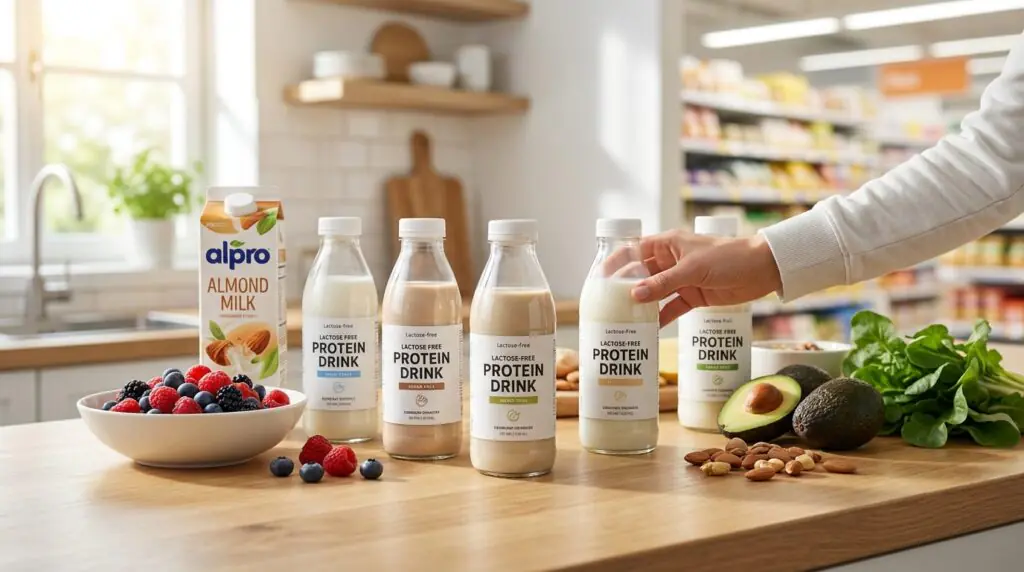
1. The Modern Protein Paradox: Why Finding a True Lactose-Free Shake Is Surprisingly Difficult
Standing in the sports nutrition aisle facing towering walls of ready-to-drink shakes can feel like navigating an ingredient minefield. For millions of consumers managing primary hypolactasia, secondary milk sensitivities, or systemic digestive distress, the promise of rapid muscle repair often collides with debilitating gastrointestinal discomfort. You reach for a bottle proudly branded as a high-protein recovery aid, only to find yourself calculating the risk of painful bloating, cramping, and systemic inflammation just an hour after leaving the gym. The market is saturated with options, yet discovering a dependable protein drink lactose free formulation remains an exhausting, high-stakes guessing game.
The fundamental issue stems from how manufacturers formulate and market modern ready-to-drink (RTD) beverages. According to Food Allergy Research & Education (FARE) Clinical Standards, non-IgE-mediated food intolerances and genuine milk protein allergies require sharply differentiated consumer warnings, yet front-of-package claims frequently blur these physiological boundaries. A beverage labeled ‘dairy-free’ may legally contain casein derivatives, while a bottle boasting ‘lactose-free’ may be constructed using enzymatic lactase additions that leave residual disaccharides capable of triggering sensitive thresholds.
Furthermore, relying on ultra-processed shortcuts has fundamentally altered the nutritional integrity of these functional drinks. Research cataloged in PubMed Research on Ultra-Processed Foods & Gut Microbiome Disruption highlights how synthetic emulsifiers, intense micro-particulated gums, and artificial thickeners frequently irritate the epithelial lining of the gastrointestinal tract, producing symptoms virtually identical to severe lactose intolerance. Consumers are left wondering whether their physical distress is caused by hidden milk sugars or industrial chemistry masquerading as convenient wellness.
Scan Any Label for Hidden Additives and Allergens — Free
Never second-guess confusing grocery labels again. Download Food Scan Genius to uncover hidden additives, toxic dyes, and allergens for the whole household before you buy.


2. Decoding the Label: Sneaky Dairy Derivatives and Additives in RTD Protein
Regulatory labeling standards permit substantial ambiguity when it comes to classifying milk fractions. Under standard FDA and international codexes, products can claim ‘lactose-free’ status if dairy sugars test below specific residual thresholds, yet this offers zero protection for individuals sensitive to minor bovine fractions or secondary processing aids. When searching for an authentic protein drink lactose free solution, scrutinizing the fine print is mandatory. Below are the most common deceptive ingredients and labeling pitfalls hiding on functional beverage shelves:
- Milk Protein Concentrate (MPC) and Milk Protein Isolate (MPI): While isolates undergo extensive membrane microfiltration to strip lactose, lower-grade concentrates often retain measurable sugar fractions. If the manufacturer does not actively inject exogenous lactase enzymes or fully isolate the protein, these can cause acute symptoms.
- Enzymatically Treated Whey Derivatives: Many commercial shakes incorporate standard sweet whey or native whey, followed by the addition of lactase enzyme. If the enzyme activity degrades during storage, unhydrolyzed lactose molecules remain fully intact and bioavailable to your gut flora.
- Hydrolyzed Casein and Sodium/Calcium Caseinate: Frequently added to dairy-free non-dairy creamers and plant-hybrid beverages to stabilize emulsion, caseinates are technically derived from milk. While nearly devoid of lactose, they often trigger cross-reactive inflammatory responses that mimic disaccharide intolerance.
- Polysorbates and Industrial Emulsifiers: Evaluated under rigorous European Food Safety Authority (EFSA) Additive Safety Regulations, synthetic stabilizers like Polysorbate 80 and Carboxymethylcellulose (CMC) are routinely used to suspend plant and dairy proteins. They can alter mucosal thickness and induce post-workout bloating independent of dairy sugars.
- Hidden Saturated Fat Fillers: To replicate the creamy mouthfeel of whole dairy milk without lactose, manufacturers lean heavily on hydrogenated palm fractions and coconut creamers. These can clash directly with World Health Organization Guidelines on Healthy Diets & Saturated Fats, undermining your cardiovascular health while pursuing athletic recovery.
- Sugar Alcohols (Polyols): Erythritol, maltitol, and xylitol are ubiquitously deployed to maintain zero-sugar claims. When combined with fast-digesting proteins, polyols pull excess water into the large intestine via osmotic pressure, causing severe gastrointestinal distress commonly misattributed to milk sugar.
3. Food Scan Genius vs. Legacy Solutions: Total Transparency in Every Scan
| Platform / Approach | Core Pricing Model | Ingredient Analysis Depth | Dietary Profiles & Customization | Family Multi-Scanning |
|---|---|---|---|---|
| Food Scan Genius | 100% Free Core (No Paywalls) | NutriGraph (5M+ UPCs), Recursive AST, NOVA 1-4, Nutri-Score | 39 Profiles + Custom Sensitivities (Additives, Gums, Oils) | Yes (Single scan audits whole family simultaneously) |
| Fig App | $59/year Paywall (Limited free scans) | Proprietary database, basic sub-tier flag checks | Fixed profile list, restricted custom logic without tier | No (Requires manual single-profile switching) |
| Spoonful | Freemium cap (Strict daily scan limits) | FODMAP-centric, static ingredient matching | Limited to standard IBS/allergy frameworks | No (Single-user verification only) |
| Manual Label Reading | Free (Time-intensive) | High human error, misses technical sub-ingredient aliases | Cognitively impossible for multi-person households | Manual cross-referencing per item |
While legacy shopping apps lock critical allergy features behind steep subscription fees like Fig’s $59 per year or impose Spoonful’s arbitrary daily scanning caps, Food Scan Genius believes food safety is a fundamental right. Powered by the enterprise NutriGraph Database—spanning more than 5,000,000 verified UPC/EAN barcodes across North America, Europe, and global distribution channels—our engine bypasses surface-level claims. By deploying recursive Abstract Syntax Tree (AST) parsing on every label, the platform scrutinizes compound parentheticals down to the fourth sub-tier level, ensuring unlisted caseinates, hidden whey derivatives, and reactive thickeners never escape undetected.
Rather than relying on arbitrary, moralizing red-or-green scores, our ScanGenius AI Insight delivers objective, nuanced intelligence tailored to your body. You instantly receive clear classifications under the international NOVA 1-4 food processing scale and validated Nutri-Score metrics, supported by real-time translation across 11 global languages. Furthermore, our Multi-Household Family Profiles feature transforms everyday grocery shopping: a single barcode scan audits the product against everyone’s specific needs simultaneously, producing granular alerts such as ‘Safe for Mom (Lactose-Free), Fails for Liam (Pea Protein Allergy)’.
4. Related Food Safety & Dietary Guides
- Best Food Allergy Scanner App – Scan Food Labels Instantly — Food Allergy & Sensitivity Scanner Hub
- The 7 Best Free Food Scanner Apps of 2026 — best free food scanner apps
- Choosing the Best Barcode Scan App for Your Health — guide to choosing a barcode scanner app
- Food Scan Genius: World’s #1 Food Ingredient Scanner App — Food Scan Genius scanner app
5. Scientific & Health Authority References
- Food Allergy Research & Education (FARE) Clinical Standards
- European Food Safety Authority (EFSA) Additive Safety Regulations
- PubMed Research on Ultra-Processed Foods & Gut Microbiome Disruption
- World Health Organization Guidelines on Healthy Diets & Saturated Fats
6. How to Scan in 3 Simple Steps
- Download the 100% free Food Scan Genius app on iOS or Android with zero subscription paywalls.
- Select the ‘Lactose-Free’ dietary profile or activate custom sensitivity toggles for specific gums, seed oils, or sugar alcohols.
- Scan any ready-to-drink protein shake barcode in under 2 seconds to get instant AST ingredient audits, NOVA scores, and multi-family alerts.
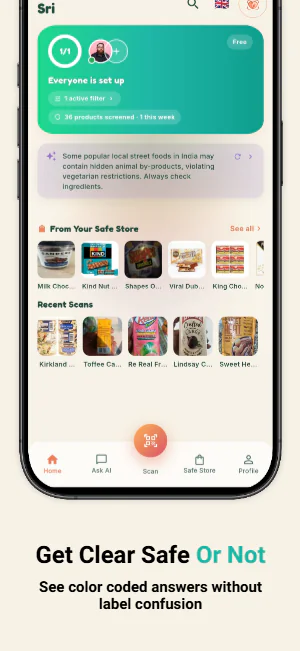
Instant Nut Allergen Audit Trail
7. Frequently Asked Questions (FAQ)
What makes a protein drink completely lactose free compared to dairy-free?
A dairy-free drink contains no milk-derived ingredients whatsoever, typically relying on soy, pea, almond, or oat bases. A protein drink lactose free formulation can still originate from cow’s milk (such as whey protein isolate or ultra-filtered milk) provided the lactose sugars have been systematically filtered out or chemically split into glucose and galactose using lactase enzymes. Food Scan Genius parses sub-ingredients to verify if dairy proteins or residual sugars remain.
Can whey protein isolate shakes still trigger lactose intolerance symptoms?
High-purity Whey Protein Isolate (WPI) is typically 90% or more protein by weight and contains virtually non-existent levels of lactose (less than 1% per serving), making it tolerable for most lactose-intolerant individuals. However, trace amounts can still trigger severe sensitivities, and many commercial RTD shakes blend WPI with cheaper Whey Protein Concentrates (WPC). Scanning the product with Food Scan Genius instantly exposes compound blends and warns you of potential trigger proteins.
Why do some lactose-free protein drinks cause stomach cramps and bloating?
Gastrointestinal distress from lactose-free shakes is frequently caused by secondary industrial additives rather than dairy sugars. Ingredients such as carrageenan, guar gum, carboxymethylcellulose, and sugar alcohols (polyols like erythritol) can disrupt the gut microbiome and create osmotic imbalances. Food Scan Genius rates every scanned beverage on the NOVA 1-4 ultra-processing spectrum and highlights irritating additives through custom sensitivity filters.
How does Food Scan Genius help families with mixed dietary restrictions shop for protein drinks?
Through Multi-Household Family Profiles, Food Scan Genius checks multiple user preferences in a single scan. If you require a lactose-free protein drink while your partner avoids seed oils and your child has a tree nut allergy, one quick barcode scan delivers a unified safety audit with personalized pass/fail attribution for every family member.
Know What’s In Your Food Before You Buy — Scan Free Today
Never second-guess confusing grocery labels again. Download Food Scan Genius to uncover hidden additives, toxic dyes, and allergens for the whole household before you buy.