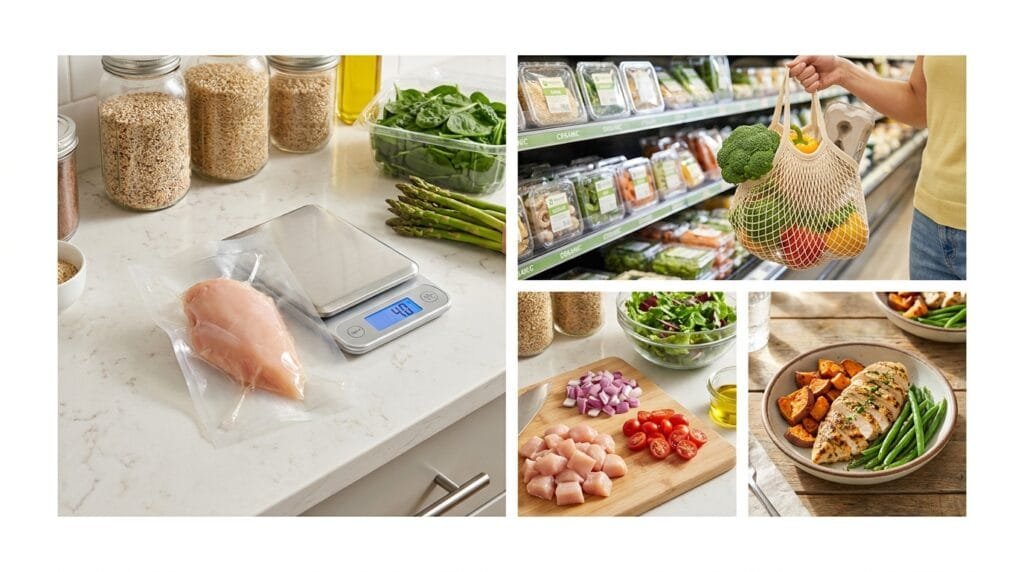
A standard 4-ounce (113g) raw boneless, skinless chicken breast provides approximately 136 calories, 25.5 grams of protein, 2.9 grams of fat, and 0 grams of carbohydrates. Cooked, 4 ounces of roasted breast meat delivers roughly 187 calories, 35 grams of protein, and 4 grams of fat.
Nutritional Architecture of a 4 oz Chicken Breast: Raw vs. Cooked Metrics
Understanding the nutritional profile of a 4-ounce chicken breast requires an exact distinction between raw agricultural commodities and their thermally processed counterparts. According to baseline data established by the USDA FoodData Central database (Foundation Foods, FDC ID 171077), an untrimmed, raw, boneless, and skinless chicken breast consists of approximately 74% to 75% water, 22.5% protein, 2.6% total lipid content, and less than 1% mineral ash. When weighed raw on a calibrated kitchen scale, a 4-ounce portion (exactly 113.4 grams) yields 136 calories, 25.5 grams of complete biological protein, 2.9 grams of total fat (of which 0.8 grams are saturated), 74 milligrams of native sodium, and zero carbohydrates, fiber, or simple sugars.
During culinary heat application—whether through roasting, grilling, poaching, or broiling—thermal energy denatures the muscular myofibrillar proteins (primarily myosin and actin), causing the structural matrix to contract and expel unbound intracellular water. A standard chicken breast loses approximately 20% to 25% of its total moisture mass during standard cooking. Consequently, if a consumer places a 4-ounce raw cutlet into an oven, it will emerge weighing approximately 3 to 3.2 ounces (85 to 91 grams). Conversely, consuming a 4-ounce portion measured after cooking requires an initial raw mass of roughly 5.2 to 5.4 ounces (147 to 153 grams). This thermal condensation concentrates both energy and macronutrients, causing 4 ounces of cooked roasted breast to register approximately 187 calories, 35.1 grams of protein, and 4.0 grams of fat.
Beyond macronutrients, a 4-ounce serving is an exceptional source of bioactive micronutrients. It provides roughly 14.8 milligrams of niacin (vitamin B3), satisfying more than 90% of the daily adult requirement, alongside 0.9 milligrams of vitamin B6, 250 milligrams of phosphorus, and 31 micrograms of selenium, an essential cofactor for thyroid hormone metabolism and antioxidant enzymatic defenses. The lipid profile is uniquely favorable for metabolic health: with less than one gram of saturated fatty acids per raw 4-ounce portion, chicken breast effortlessly complies with the World Health Organization Guidelines on Healthy Diets & Saturated Fats, which recommend restricting saturated fats to under 10% of total daily energy intake to minimize low-density lipoprotein (LDL) particle formation and long-term cardiovascular risk.
However, baseline biochemical figures vary significantly depending on industrial processing methods. Commercial poultry producers frequently utilize a process known as “plumping” or “deep injection,” introducing liquid solutions comprising potable water, sodium chloride, and synthetic phosphates up to 15% of the total product weight. The safety, acceptable daily intake, and maximum usage thresholds of these functional mineral additives are codified under the European Food Safety Authority (EFSA) Additive Safety Regulations and USDA Food Safety and Inspection Service (FSIS) standards. Plumped chicken breasts contain artificially elevated sodium readings—often exceeding 250 to 350 milligrams per 4 ounces compared to just 70 milligrams in unadulterated meat—while simultaneously diluting the true protein density per ounce of purchased weight.
Decoding Packaged Chicken Labels: US Nutrition Facts vs. International Standards
Evaluating commercial chicken packaging requires navigating stark regulatory differences in how nutrition panels report serving sizes, raw versus cooked data, and retained moisture. In the United States, the USDA FSIS regulates poultry labeling under the Code of Federal Regulations (9 CFR § 381.409). The standard Reference Amount Customarily Consumed (RACC) for raw poultry is 112 grams (equivalent to 4 ounces). For instance, examining a package of Tyson All Natural Boneless Skinless Chicken Breasts reveals a declared serving size of 4 oz (112g) raw, listing 110 calories, 23g protein, 1.5g fat, and 200mg sodium. The package fine print indicates the meat is “injected with up to an 8% solution of broth, salt, and natural flavorings.” In contrast, Bell & Evans Air Chilled Boneless Skinless Chicken Breast lists a 112g raw serving containing 120 calories, 26g protein, 1.5g fat, and only 65mg sodium, because air-chilling prevents water absorption during post-slaughter cooling.
In the European Union and the United Kingdom, Regulation (EU) No 1169/2011 mandates that nutritional declarations appear per 100 grams of the food as sold, irrespective of customary portion sizes. When inspecting a package of Tesco British Fresh Chicken Breast Portions or Waitrose Essential Free Range Chicken Breast Fillets, consumers do not see a 4-ounce reference. Instead, the mandatory front-and-back table displays values per 100g (e.g., 106 kcal, 24.0g protein, 1.2g fat, and 0.18g salt). To calculate the nutritional delivery of a traditional 4-ounce imperial serving (113.4g), shoppers must multiply the declared 100g values by a factor of 1.134. British and European labels often also provide an optional secondary column displaying “per portion cooked as suggested,” typically calculated as an 85g cooked fillet, which frequently misleads consumers who weigh their raw meat directly out of the butcher wrap.
When shopping for pre-seasoned, pre-marinated, or sous-vide poultry products, shoppers must remain vigilant regarding industrial emulsifiers, modified starches, and carrier additives. When evaluating store-bought poultry, scanning packaging with Food Scan Genius allows you to instantly verify whether a pre-marinated breast contains hidden dextrins, excessive sodium solutions, or industrial binders that artificially inflate portion weight. Furthermore, multi-ingredient seasoned breasts often introduce cross-contact allergen risks or formulation additions like hydrolyzed soy proteins and wheat-derived maltodextrins, which are strictly cataloged according to the Food Allergy Research & Education (FARE) Clinical Standards.
The compounding health effects of transitioning from minimally processed whole meats to highly engineered poultry preparations are substantial. Heavily seasoned, breaded, or pre-cooked frozen chicken strips frequently contain industrial shelf-life extenders, texturizers, and emulsifiers that alter how the digestive tract processes protein. Contemporary clinical findings published in PubMed Research on Ultra-Processed Foods & Gut Microbiome Disruption demonstrate that diets dense in industrial food additives can impair intestinal epithelial integrity, reduce microbial diversity, and promote systemic low-grade inflammation, reinforcing the metabolic value of buying single-ingredient, unadulterated 4-ounce cuts.
| Preparation / State | Portion Basis | Calories (kcal) | Protein (g) | Total Fat (g) | Saturated Fat (g) | Sodium (mg) |
|---|---|---|---|---|---|---|
| Raw, Air-Chilled (Unadulterated) | 4 oz (113.4g) Raw | 136 | 25.5 | 2.9 | 0.8 | 74 |
| Raw, Solution-Injected (8-12% Brine) | 4 oz (113.4g) Raw | 115 | 21.8 | 1.8 | 0.5 | 260–340 |
| Roasted (Shrunk from 4 oz Raw) | ~3.0 oz (85g) Cooked | 140 | 26.3 | 3.0 | 0.9 | 63 |
| Roasted (Weighed Cooked) | 4 oz (113.4g) Cooked | 187 | 35.1 | 4.0 | 1.1 | 84 |
| Poached / Boiled (Weighed Cooked) | 4 oz (113.4g) Cooked | 179 | 36.2 | 2.8 | 0.7 | 79 |
| Pan-Seared (+ 1 tsp Olive Oil) | ~3.1 oz (88g) Cooked | 180 | 26.1 | 7.5 | 1.5 | 70 |
| Breaded & Oven-Baked Cutlet | 4 oz (113.4g) Cooked | 242 | 24.5 | 10.2 | 2.4 | 380 |
7 Balanced Meals with 4 oz Chicken Breast and Critical Weighing Mistakes
Deploying a single 4-ounce boneless, skinless chicken breast across daily meals ensures an optimal 25-to-35-gram pulse of leucine-rich protein, critical for stimulating skeletal muscle protein synthesis without delivering excess dietary fat. Seven balanced culinary applications include: (1) Quinoa & Roasted Brassica Bowl: 4 oz grilled breast cubed over 1/2 cup cooked tri-color quinoa, 1 cup steamed broccoli florets, and a lemon-tahini drizzle (Total: ~380 kcal, 34g protein); (2) Classic Mediterranean Chopped Salad: 4 oz chilled sliced breast tossed with romaine, Persian cucumbers, Kalamata olives, diced tomatoes, and 1 tablespoon extra virgin olive oil (Total: ~340 kcal, 30g protein); (3) Low-Glycemic Ginger Vegetable Stir-Fry: 4 oz sliced breast flash-seared in sesame oil with snap peas, bell peppers, and coconut aminos over riced cauliflower (Total: ~260 kcal, 29g protein); (4) Stuffed Sweet Potato: 4 oz shredded poached breast combined with black beans and roasted corn, packed into a baked medium sweet potato (Total: ~410 kcal, 33g protein); (5) Zucchini Noodle Basil Pesto Skillet: 4 oz pan-seared breast strips served over spiralized zucchini ribbons tossed with 1 tablespoon pine nut pesto (Total: ~290 kcal, 28g protein); (6) Immunity Bone Broth Soup: 4 oz gently simmered shredded breast in low-sodium chicken bone broth loaded with baby spinach, shredded carrots, celery, and fresh turmeric (Total: ~220 kcal, 36g protein); and (7) Avocado & Lime Lettuce Wraps: 4 oz blackened chicken breast strips nestled inside crisp butter lettuce leaves, topped with 1/4 sliced avocado and fresh pico de gallo (Total: ~270 kcal, 28g protein).
The most pervasive error in dietary tracking occurs when individuals confound raw mass with cooked mass. If a recipe or diet protocol calls for 4 ounces of chicken breast and the user logs “4 oz roasted chicken breast” while weighing 4 ounces of raw meat on the counter, they underestimate their total protein intake by nearly 10 grams and overestimate their caloric intake relative to actual volume. The raw chicken yields barely 3 ounces post-cooking, rendering 140 calories rather than the 187 calories expected from 4 ounces of cooked density. To maintain analytical precision, always record poultry using the weight state in which it was physically placed on the scale: raw entries for raw weights, or cooked entries for cooked weights.
A secondary tracking mistake stems from invisible cooking fats and exterior moisture. Pan-searing an untrimmed 4-ounce breast with an unmeasured “glug” of cooking oil frequently adds between 100 and 150 calories of pure fat (11 to 14 grams of lipids) to an otherwise lean protein source. In contrast, weighing a breast that has been poached or air-chilled ensures no external lipid absorption. Lastly, consumers frequently fail to account for bone and skin when purchasing bone-in cuts; a 4-ounce bone-in, skin-on split chicken breast yields only approximately 2.2 ounces of edible skinless lean meat once the skeletal matrix and sub-dermal adipose layers are discarded.
Frequently asked questions
How much protein is in 4 oz of cooked chicken breast versus raw?
A 4-ounce (113g) portion of raw boneless, skinless chicken breast contains approximately 25.5 grams of protein. Because water evaporates during cooking, a 4-ounce portion of roasted chicken breast that is weighed after cooking is more concentrated, providing roughly 35.1 grams of protein.
Does baking or boiling chicken breast reduce its calories?
No, cooking methods do not destroy calories, but they alter water weight. Boiling or baking without added cooking oils causes moisture loss, concentrating the calories per ounce. However, boiling may leach a minor amount of intracellular minerals and water-soluble B vitamins into the cooking water if the broth is discarded.
What is the difference between air-chilled and water-chilled chicken breasts?
Water-chilled chicken is cooled in chlorinated ice-water baths post-slaughter, causing the meat to absorb up to 8% to 12% excess water weight that cooks off in the pan. Air-chilled chicken is cooled via cold air circulation chambers, meaning the 4-ounce weight on the scale represents pure poultry tissue without diluted protein density.
How much sodium is naturally in a 4 oz chicken breast?
An unadulterated, raw 4-ounce boneless and skinless chicken breast naturally contains between 65 and 75 milligrams of native intracellular sodium. If a package lists 200 to 400 milligrams per serving, the manufacturer has injected the meat with a saline or sodium phosphate brine solution.
Is a 4 oz chicken breast enough protein for one meal?
Yes. A 4-ounce chicken breast provides between 25.5 grams (raw weight) and 35.1 grams (cooked weight) of high-quality complete protein. This delivery contains more than 2.5 grams of the essential branched-chain amino acid leucine, successfully triggering the mTOR signaling pathway to maximize muscle protein synthesis in adults.
References
- Food Allergy Research & Education (FARE) Clinical Standards
- European Food Safety Authority (EFSA) Additive Safety Regulations
- PubMed Research on Ultra-Processed Foods & Gut Microbiome Disruption
- World Health Organization Guidelines on Healthy Diets & Saturated Fats
Related guides
- Best Food Allergy Scanner App – Scan Food Labels Instantly — Food Allergy & Sensitivity Scanner Hub
- The 7 Best Free Food Scanner Apps of 2026 — best free food scanner apps
- Choosing the Best Barcode Scan App for Your Health — guide to choosing a barcode scanner app
- Food Scan Genius: World’s #1 Food Ingredient Scanner App — Food Scan Genius scanner app
Check Any Label Against 5 Million Products — Free
Never second-guess confusing grocery labels again. Download Food Scan Genius to uncover hidden additives, toxic dyes, and allergens for the whole household before you buy.